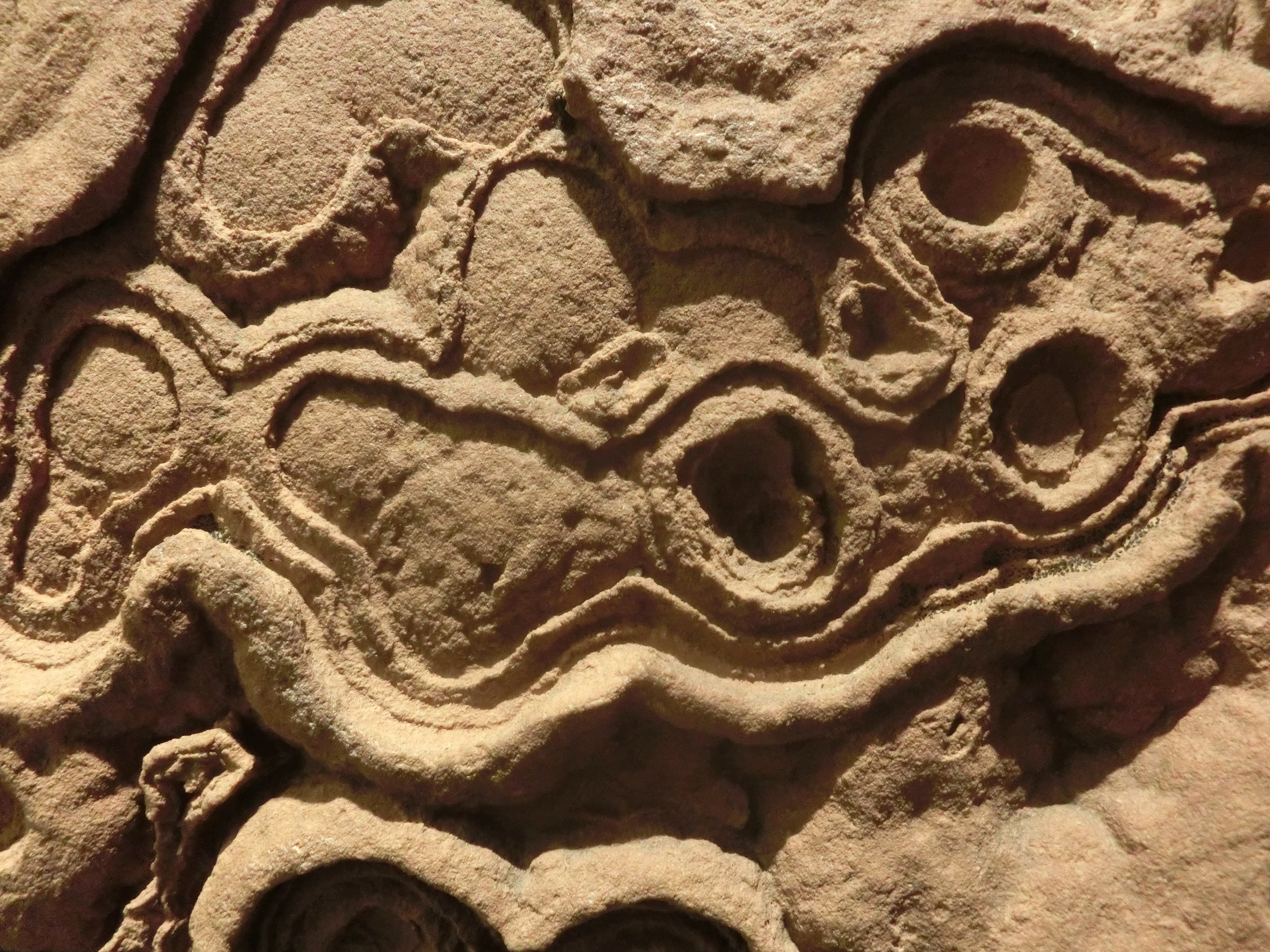
Stromatolite
Image: Gunnar Creutz (CC BY-SA 4.0)
Mineral NameStromatolite
Chemical FormulaPrimarily CaCO3 (calcite/aragonite) or SiO2 (chert), often with impurities
Mohs Hardness3
Lusterdull
Streak Colorwhite to light brown
CleavageNot applicable (rock/biosedimentary structure)
Fractureuneven
Specific Gravity2.7
Colorsbrown, tan, gray, reddish
Transparencyopaque
Type LocalityGöteborgs Naturhistoriska Museum (specimen location); globally widespread in ancient sedimentary rocks, modern examples in Shark Bay, Australia
Mineral GroupSedimentary rock (biogenic structure)
Usespaleontological study, geological indicators, educational specimens, collector
Associated Mineralscalcite, dolomite, quartz (chert), clay minerals, iron oxides
Description
The image shows a brownish, textured rock with distinct concentric and wavy layered structures, characteristic of fossilized microbial mats.
Geological Context
Stromatolites are layered accretionary structures formed in shallow water by the trapping, binding, and cementation of sedimentary grains by biofilms of microorganisms, especially cyanobacteria. They are among the oldest known fossil evidence of life on Earth, dating back over 3.5 billion years, and played a crucial role in oxygenating Earth's early atmosphere.


