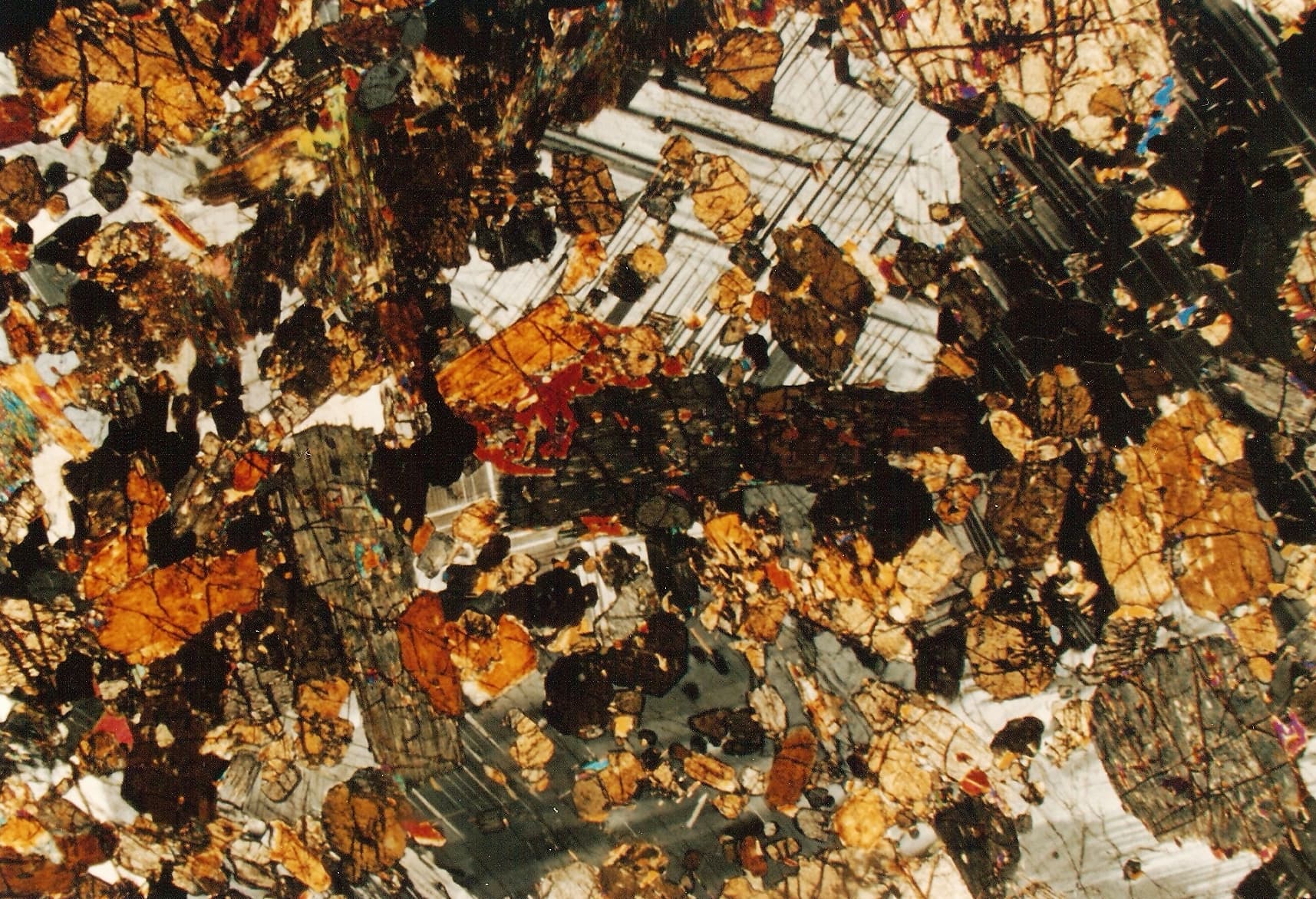
Igneous Rock Microsection
Image: Leo-setä (CC BY 2.0)
Mineral NameIgneous Rock Microsection
Chemical FormulaComplex, varies by mineral composition
Mohs HardnessVaries by mineral component (e.g., 6-6.5 for feldspar, 5-6.5 for pyroxene)
Streak ColorVaries by mineral component (e.g., white for feldspar, white to grayish-green for mafic minerals)
CleavageVaries by mineral component (e.g., two directions at ~90° for feldspar/pyroxene, ~56°/124° for amphibole)
FractureVaries by mineral component (e.g., conchoidal to uneven)
Specific GravityVaries by mineral component (e.g., 2.6-2.8 for feldspar, 3.2-3.6 for pyroxene)
Colorsgrey, white, brown, orange, black, blue, green
Transparencytransparent
Type LocalityNot specified
Mineral GroupSilicates (predominant)
Usesscientific study, geological research
Associated Mineralsplagioclase feldspar, pyroxene, amphibole, opaque minerals
Raritycommon
Description
A microscopic image of a rock thin section under polarized light, displaying an interlocking texture of various mineral grains. Prominent are lath-shaped minerals exhibiting polysynthetic twinning (likely plagioclase) alongside brownish, orange, and dark ferromagnesian minerals.
Geological Context
This mineral assemblage and texture are characteristic of igneous rocks, formed from the crystallization of magma or lava. The presence of plagioclase and mafic minerals suggests a mafic to intermediate composition, common in both volcanic and plutonic settings.


