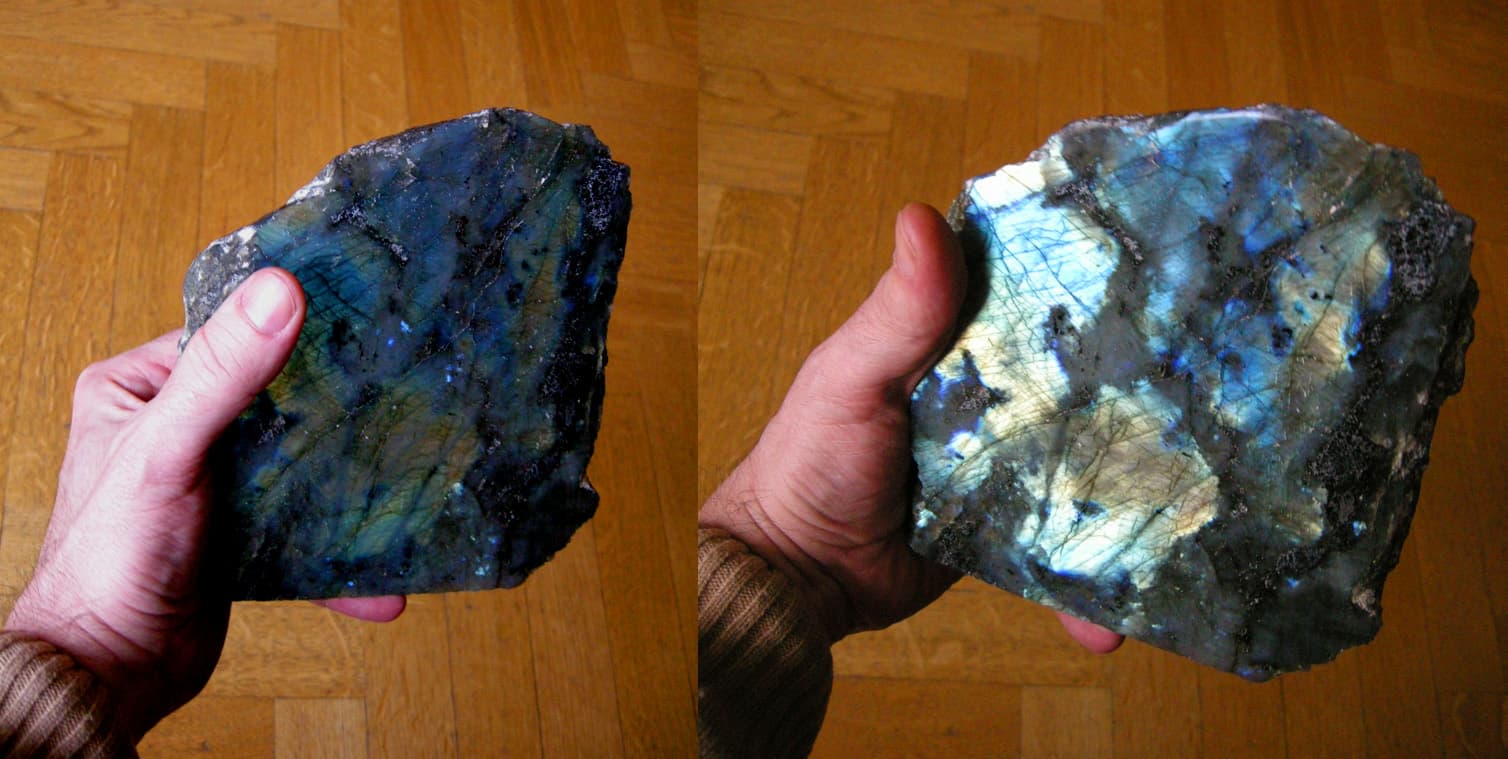
Labradorite
Image: Prokofiev (CC BY-SA 3.0)
Mineral NameLabradorite
Chemical Formula(Ca,Na)(Al,Si)4O8
Mohs Hardness6
Crystal Systemtriclinic
Lustervitreous
Streak Colorwhite
Cleavageperfect in two directions (86° and 94°)
Fractureuneven
Specific Gravity2.7
Colorsgray, dark gray, black, greenish, brownish, blue, green, yellow, orange, red
Transparencytranslucent
Type LocalityLabrador, Canada
Mineral GroupSilicates
Usesjewelry, ornamental, collector
Associated Mineralspyroxene, olivine, magnetite, ilmenite
Rarityuncommon
Description
The image shows a rough, dark gray to black specimen of labradorite held in a hand, exhibiting strong iridescent flashes of blue, green, and yellow known as labradorescence across its surface.
Geological Context
Labradorite is a feldspar mineral that forms in mafic igneous rocks such as basalt, gabbro, and anorthosite. Its distinctive labradorescence is caused by light interference within microscopic lamellar intergrowths of exsolved plagioclase phases.


