Orbicular Granite
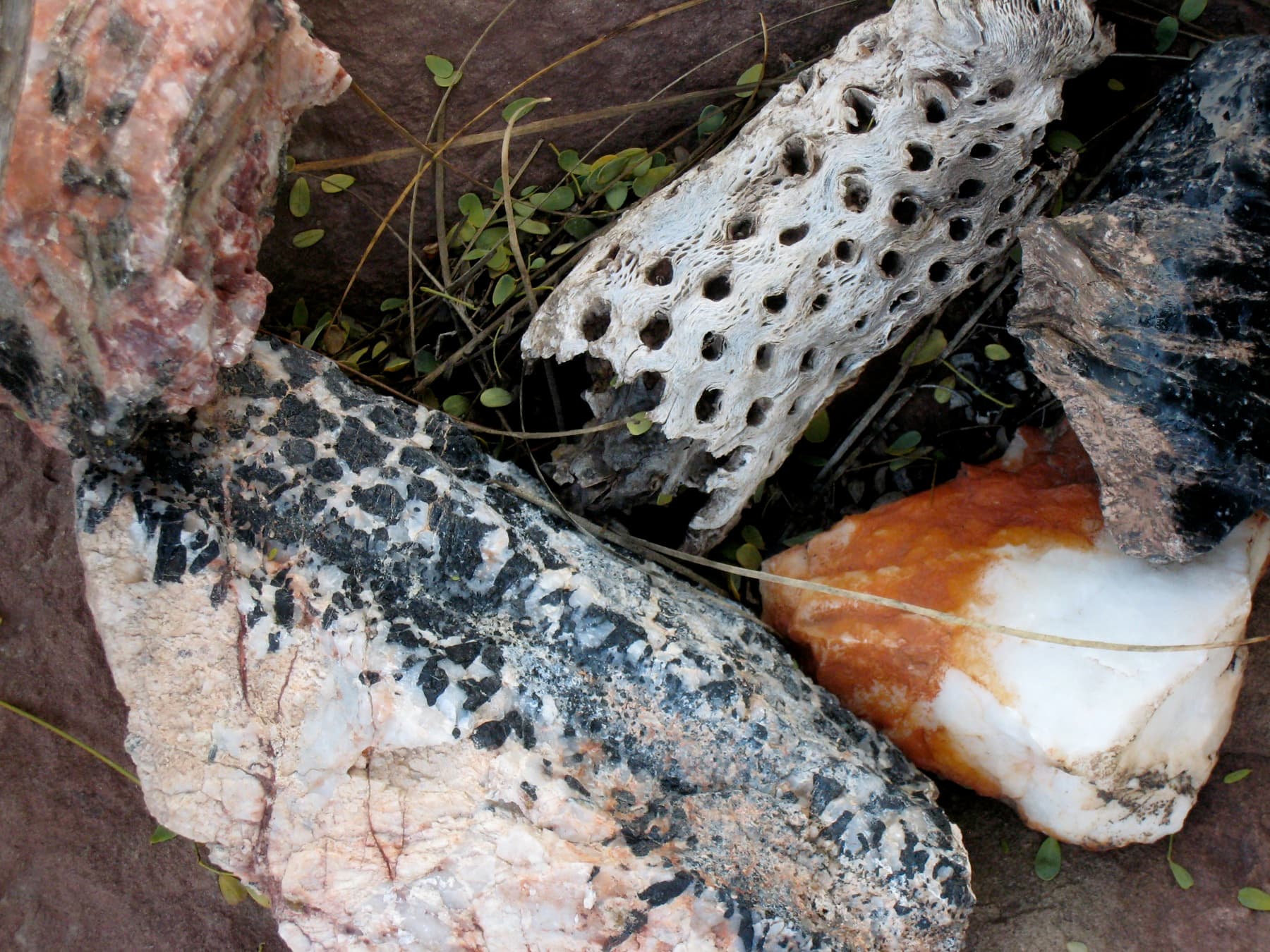
Image: cogdogblog (CC0)
Mineral NameOrbicular Granite
Chemical FormulaComplex silicate mixture (primarily SiO2, KAlSi3O8, NaAlSi3O8, CaAl2Si2O8, Fe-Mg silicates)
Mohs Hardness6
Streak ColorWhite
CleavageGood in feldspar, absent in quartz, perfect in micas (if present)
FractureUneven to conchoidal
Specific Gravity2.65
Colorswhite, black, gray
Transparencyopaque
Type LocalityWorldwide (e.g., Finland, Sweden, Australia, USA)
Mineral GroupIgneous Rock (Plutonic)
Usesdecorative stone, landscaping, collector's specimens
Associated Mineralsquartz, feldspar, biotite, hornblende
Rarityuncommon
Description
This igneous rock features distinctive spherical to ellipsoidal structures (orbicules) with concentric shells of dark minerals (like amphibole or pyroxene) and lighter minerals (quartz and feldspar) embedded in a granitic matrix. The specimen displays prominent black orbicules within a white to light gray groundmass.
Geological Context
Orbicular granites form in plutonic igneous environments, often associated with granitic intrusions. Their unique texture is believed to result from rhythmic crystallization processes during magma cooling, possibly involving supercooling or magma mixing, creating these unique concentric patterns.