Native Antimony and Calcite
Image: Rock Currier (CC BY 3.0)
Mineral NameNative Antimony and Calcite
Chemical FormulaSb (Antimony), CaCO3 (Calcite)
Mohs Hardness3-3.5 (Antimony), 3 (Calcite)
Crystal Systemtrigonal
Streak ColorGrey (Antimony), White (Calcite)
CleavagePerfect on {0001} (Antimony), Perfect rhombohedral on {1011} (Calcite)
FractureUneven (Antimony), Conchoidal to uneven (Calcite)
Specific Gravity6.68 (Antimony), 2.71 (Calcite)
Colorstin-white, grey, white, yellowish-white
TransparencyOpaque (Antimony), Transparent to translucent (Calcite)
Type LocalityConsolidated Durham Mines and Resources Ltd. Mines, Lake George, York County, New Brunswick, Canada
Mineral GroupNative Elements (Antimony), Carbonates (Calcite)
Usesmetallurgy, semiconductors, construction, optical applications, collector specimen
Associated MineralsAntimony, Calcite
Description
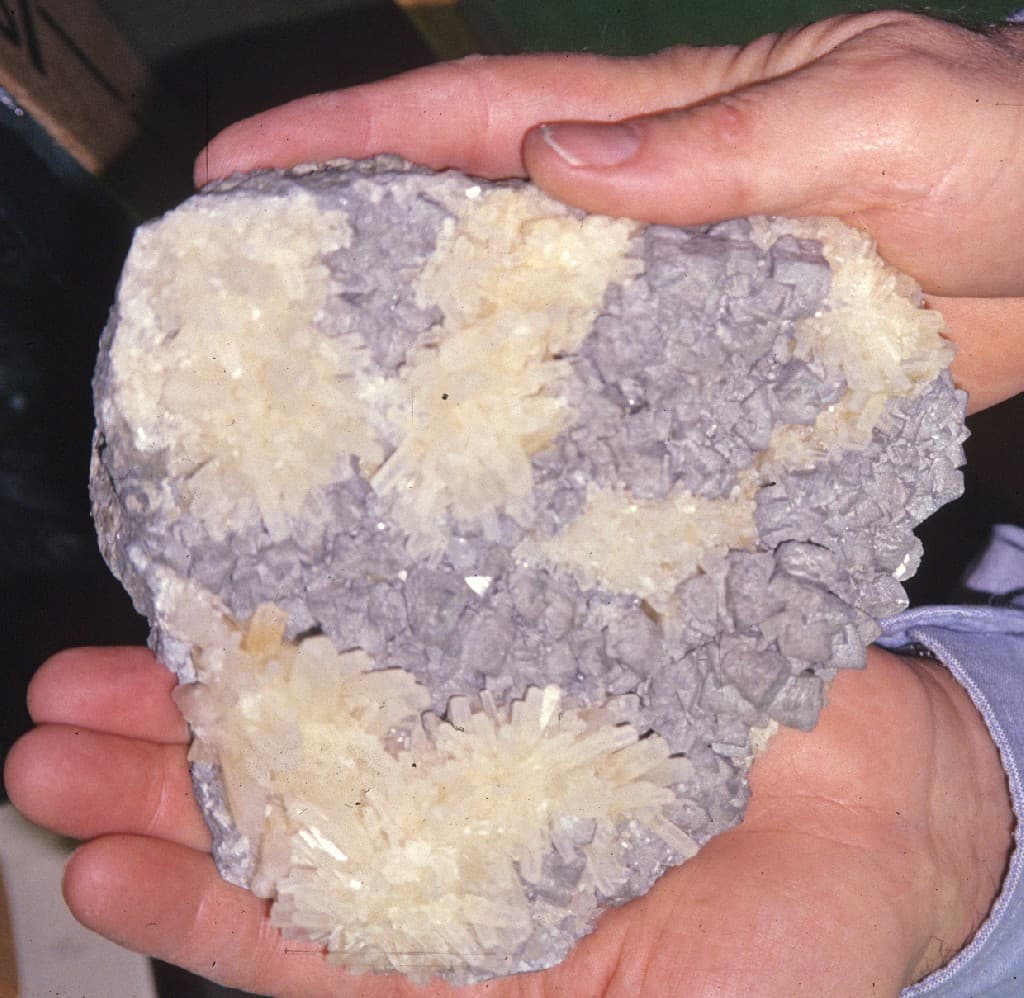
This specimen displays dull grey, blocky to granular crystals of native antimony intergrown with radiating aggregates of yellowish-white, prismatic calcite crystals.
Geological Context
Native antimony typically forms in hydrothermal veins, often associated with other antimony minerals or sulfides. Calcite is a very common mineral found in diverse geological settings, including sedimentary, metamorphic, and hydrothermal environments, often precipitating from aqueous solutions.