Feldspar (group)
Image: Ronald Werner (CC BY-SA 4.0)
Mineral NameFeldspar (group)
Chemical FormulaKAlSi3O8 (representative of K-feldspar)
Mohs Hardness6
Crystal Systemmonoclinic
Lustervitreous
Streak Colorwhite
CleavagePerfect in two directions, nearly at 90 degrees
Fractureuneven
Specific Gravity2.55
Colorswhite, pink, gray, green, yellow, brown, colorless
Transparencytransparent
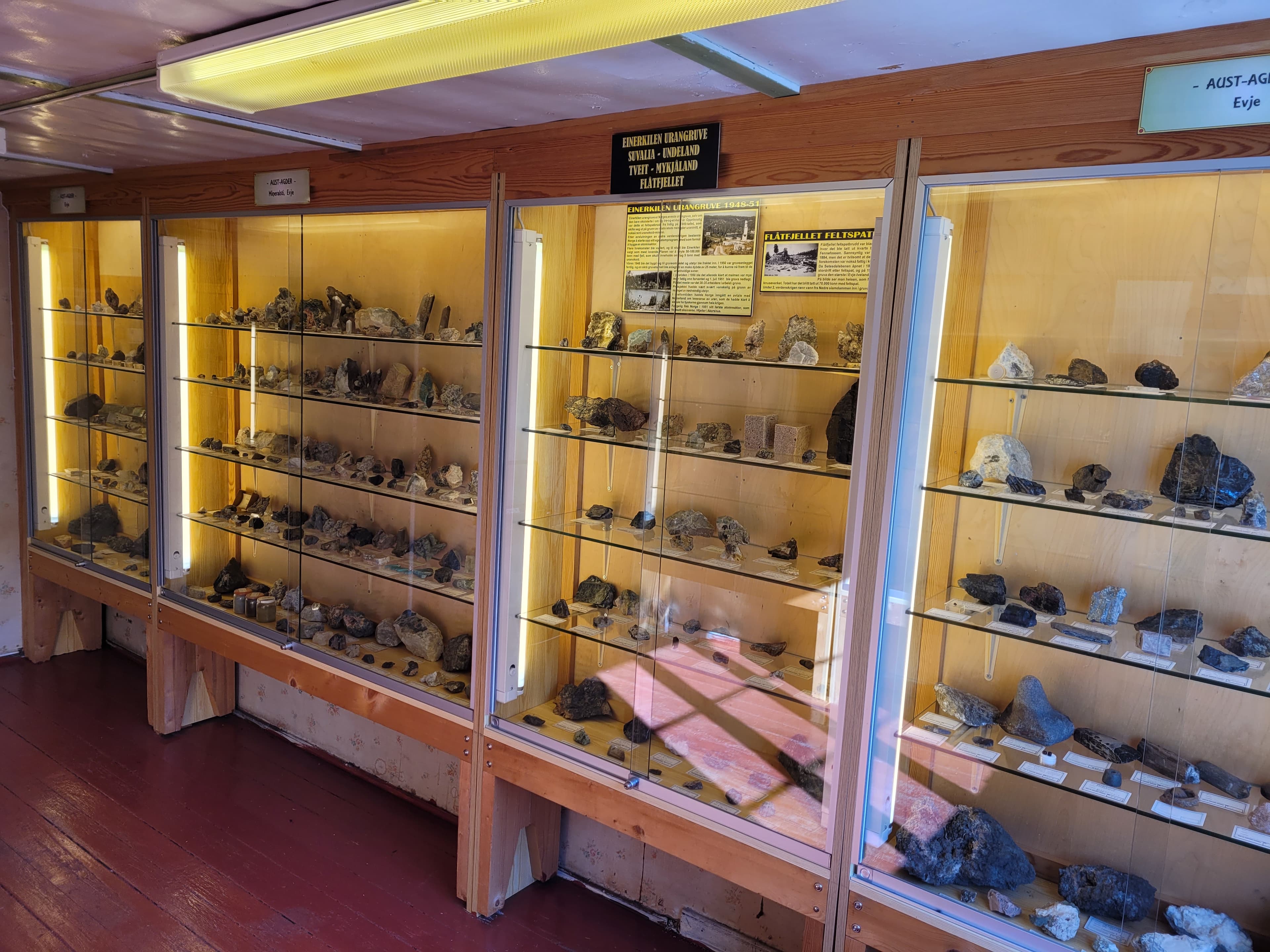
Type LocalityEvje, Agder, Norway (e.g., Landsver 1 quarry, Flåt-fjellet)
Mineral GroupSilicates
Usesceramics, glass manufacturing, abrasives, building materials, gemstones
Associated Mineralsquartz, mica, tourmaline, beryl, garnet, rare earth minerals
Raritycommon
Description
Feldspar minerals are typically found as blocky or tabular crystals, often exhibiting distinct cleavage planes. The specimens in the collection display a range of colors and forms characteristic of pegmatite minerals.
Geological Context
Feldspars are the most abundant group of minerals in the Earth's crust, forming in igneous, metamorphic, and sedimentary rocks. They are primary constituents of granite and pegmatites, such as those found in the Evje area, which are known for their large crystals and diverse mineralogy.