Hydromica and Smectite (Weathering Products)
Image: Anatoliy Polivtsev17 (CC BY-SA 4.0)
Mineral NameHydromica and Smectite (Weathering Products)
Chemical FormulaHydromica (Illite): (K,H3O)(Al,Mg,Fe)2(Si,Al)4O10(OH)2; Smectite (Montmorillonite): (Na,Ca)0.33(Al,Mg)2(Si4O10)(OH)2·nH2O
Mohs Hardness1
Crystal Systemmonoclinic
Streak Colorwhite to light gray
Cleavageperfect basal (001)
Fractureearthy
Specific Gravity2
Colorswhite, gray, green, brown
Transparencytranslucent to opaque
Type LocalityDrill core sample from K-7-1, 2 579-2 591 m (likely Ukraine, based on metadata language)
Mineral GroupSilicates (Phyllosilicates / Clay Minerals)
Usesgeological research (hydrocarbon reservoir characterization), industrial applications (ceramics, drilling muds, absorbents)
Associated Mineralsplagioclase (parent mineral), biotite (parent mineral), other rock-forming minerals in bedrock
Raritycommon
Description
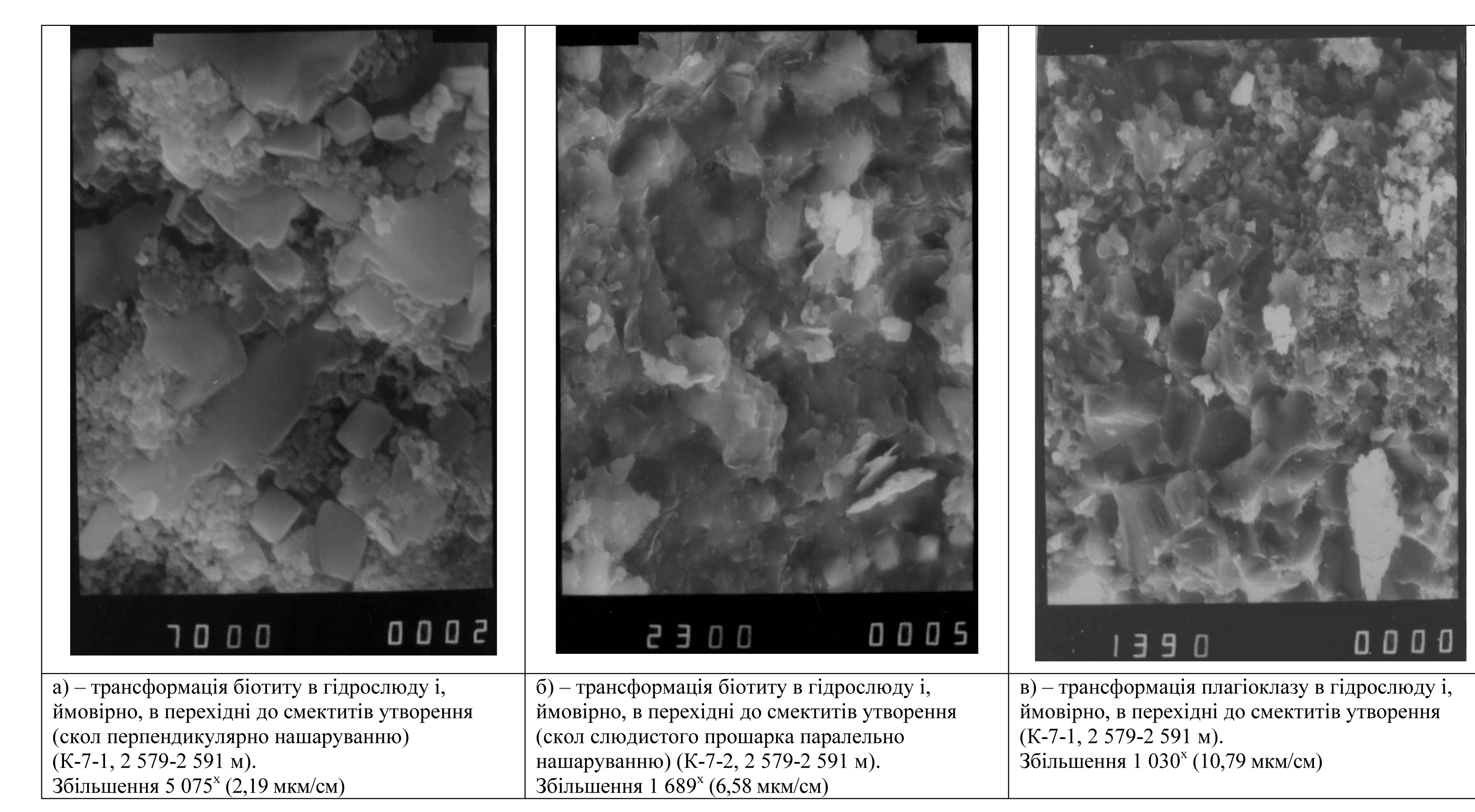
This SEM image displays the microscopic texture of weathered bedrock, showing the transformation of primary minerals like biotite and plagioclase into fine-grained hydromica and smectite. The alteration products appear as platy and irregular particles, contributing to increased porosity.
Geological Context
These clay minerals are formed through the chemical weathering of igneous and metamorphic rocks containing minerals such as plagioclase and biotite. Their formation enhances the porosity and permeability of the host rock, making it a crucial factor in evaluating potential hydrocarbon reservoirs.


