Halite
Image: Andrew Bossi (CC BY-SA 3.0)
Mineral NameHalite
Chemical FormulaNaCl
Mohs Hardness2.5
Crystal Systemcubic
Lustervitreous
Streak Colorwhite
Cleavageperfect cubic (three directions at 90 degrees)
Fractureconchoidal to uneven
Specific Gravity2.16
Colorscolorless, white, pink, red, yellow, blue, purple, gray
Transparencytransparent to translucent
Type LocalityHallstatt, Austria
Mineral GroupHalides
Usesfood additive, de-icing agent, chemical industry, water softening, animal feed, salt lamps, preservation
Associated Mineralsgypsum, anhydrite, sylvite, carnallite, dolomite, limestone
Raritycommon
Description
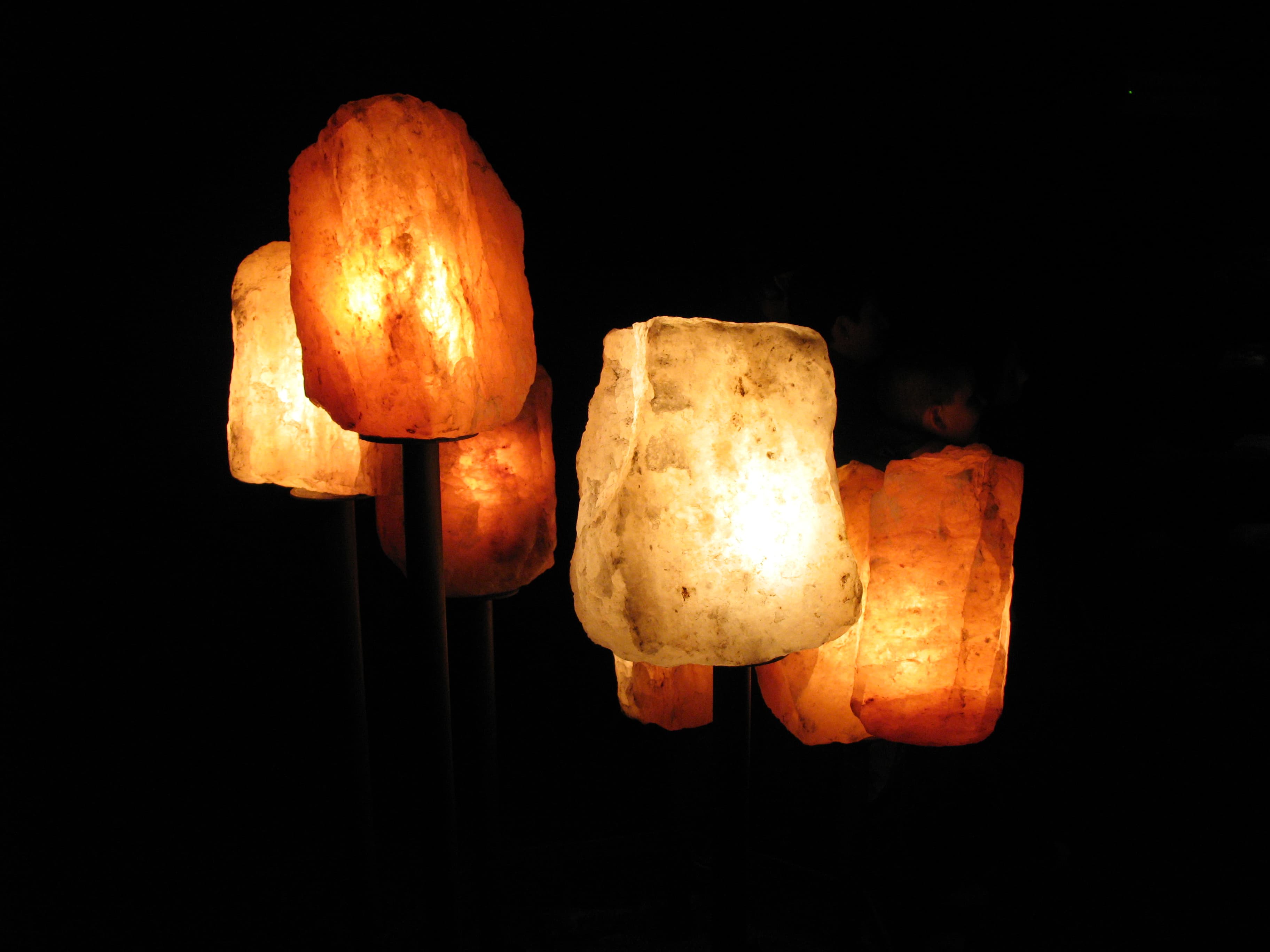
The image displays several rough-hewn blocks of halite, glowing with internal light, exhibiting translucent properties and colors ranging from white to warm orange and pink.
Geological Context
Halite forms primarily through the evaporation of saline water bodies, such as seas or salt lakes, leading to the precipitation of dissolved salts. It is a common evaporite mineral found in sedimentary basins worldwide, often associated with other evaporite minerals.