Migmatite
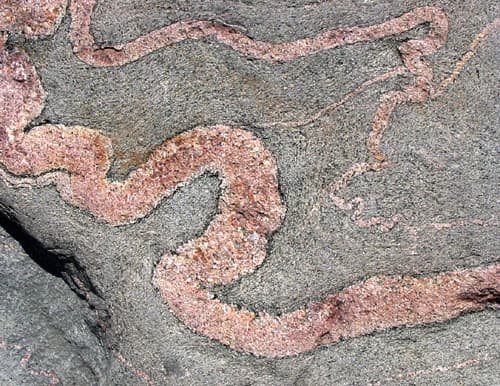
Image: Siim Sepp (CC BY-SA 3.0)
Mineral NameMigmatite
Chemical FormulaVariable, composed of multiple minerals (e.g., silicates like quartz, feldspar, mica)
Mohs HardnessVariable, typically 6-7 (Mohs) for felsic components
Streak ColorWhite to light gray (variable)
CleavageVariable, depends on constituent minerals (e.g., good in micas, poor in quartz)
FractureUneven to conchoidal (variable)
Specific GravityVariable, typically 2.6 - 3.0
Colorsgray, black, white, pink, reddish
TransparencyOpaque
Type LocalityNaissaar island, Estonia
Mineral GroupMetamorphic rock
Usesbuilding material, aggregate, geological research and education
Associated Mineralsquartz, plagioclase feldspar, potassium feldspar, biotite, muscovite, amphibole, garnet, sillimanite
Description
This rock exhibits distinct, wavy, reddish-pink bands of coarser-grained material (leucosome) intricately folded within a darker, finer-grained gray matrix (melanosome/paleosome), characteristic of ptygmatic folding.
Geological Context
Migmatites are high-grade metamorphic rocks formed under extreme temperature and pressure conditions, where partial melting occurs, creating a mixture of igneous (melted) and metamorphic (unmelted) components. They are typically found in the cores of ancient mountain belts and continental shields.