Halite
Image: André Karwath aka Aka (CC BY-SA 2.5)
Mineral NameHalite
Chemical FormulaNaCl
Mohs Hardness2.5
Crystal Systemcubic
Lustervitreous
Streak Colorwhite
Cleavageperfect cubic (in three directions at 90 degrees)
Fractureconchoidal
Specific Gravity2.16
Colorscolorless, white, grey, yellow, orange, pink, purple, blue
Transparencytransparent
Type LocalityWorldwide in evaporite deposits (e.g., Wieliczka Salt Mine, Poland; Salar de Uyuni, Bolivia)
Mineral GroupHalides
Usesfood additive, de-icing roads, chemical industry, water softening, animal feed
Associated Mineralsgypsum, anhydrite, sylvite, carnallite, dolomite, limestone
Raritycommon
Description
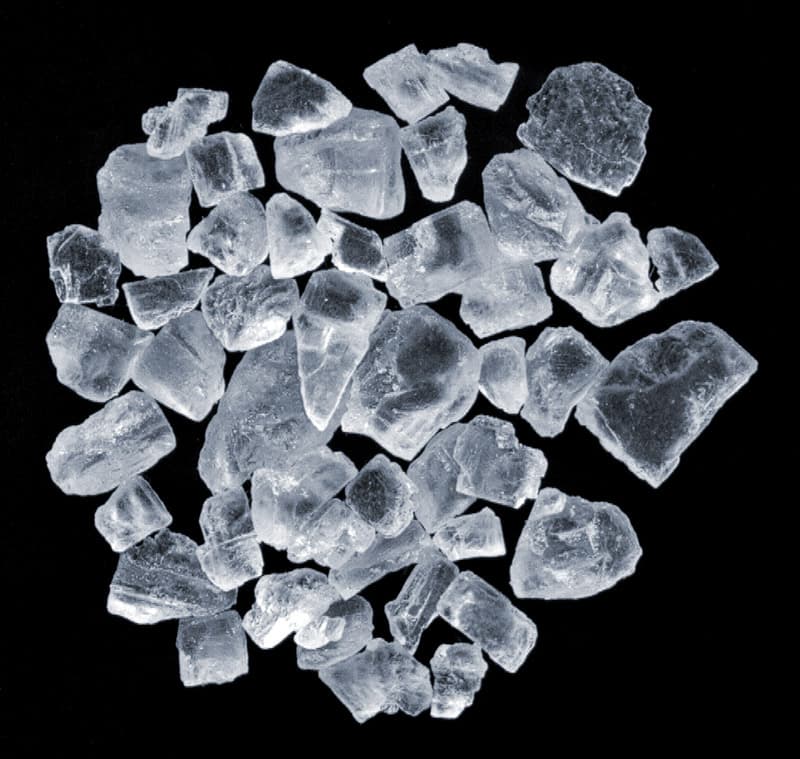
The image displays a collection of irregularly shaped, translucent to transparent, colorless to grayish crystals of halite, commonly known as rock salt, against a dark background. Many of the individual pieces show evidence of cubic cleavage.
Geological Context
Halite forms primarily through the evaporation of saline water bodies, such as seas, salt lakes, or playas, leading to the precipitation of evaporite minerals. It can also occur as efflorescences in arid regions.