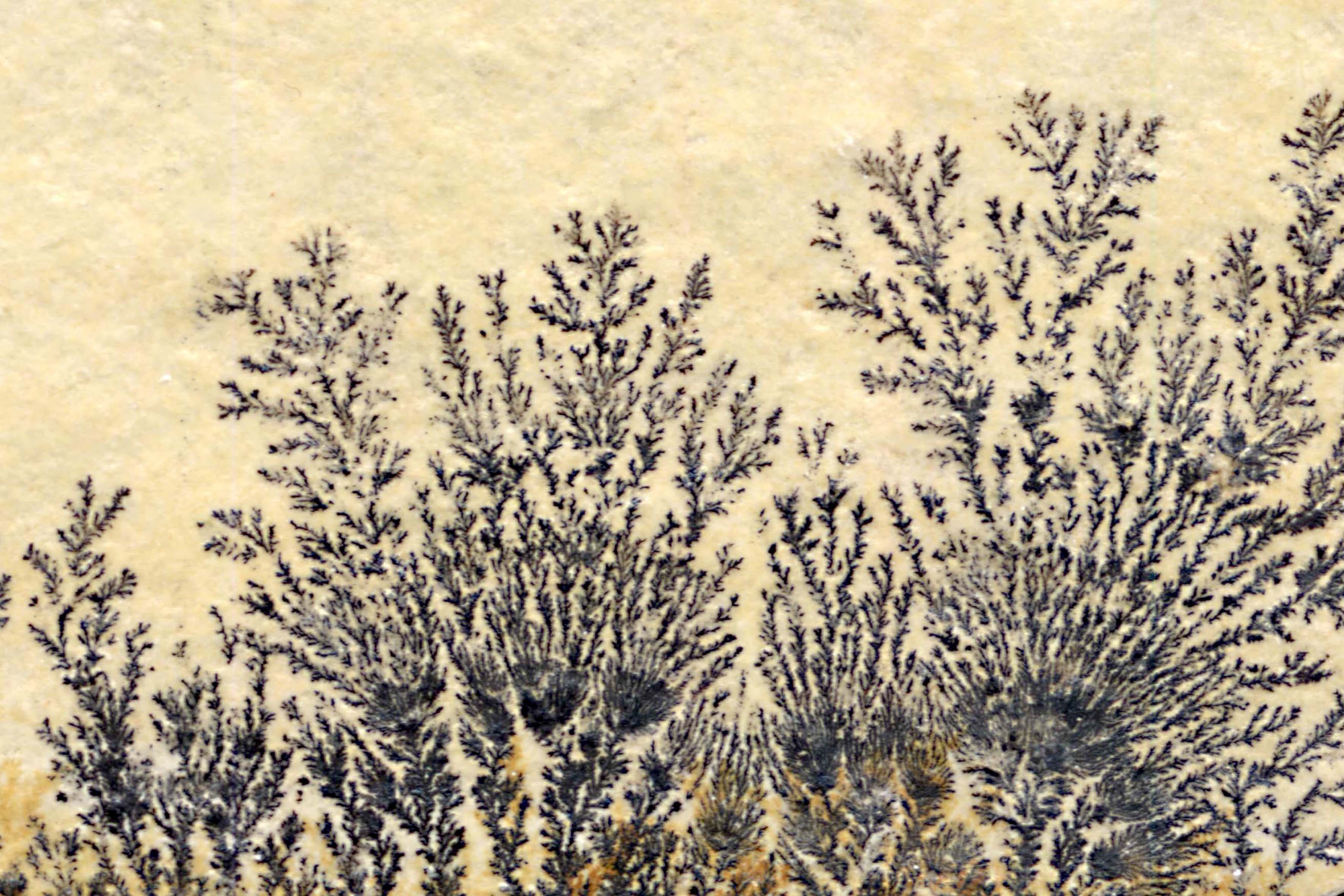
Manganese Dendrites
Image: Koltovoi (CC BY-SA 4.0)
Mineral NameManganese Dendrites
Chemical Formula(Mn,Fe)O₂
Mohs Hardness2
Streak ColorBlack to brownish-black
CleavageNone observed in dendritic form
FractureUneven to earthy
Specific Gravity4.5
Colorsdark grey, black, cream, tan
TransparencyOpaque (dendrites), translucent (host rock)
Type LocalityUral Mountains
Mineral GroupOxides
Usescollector's item, decorative stone
Associated Mineralsquartz, calcite, feldspar, pyrolusite, romanechite
Description
This specimen displays intricate, fern-like or tree-like patterns of dark manganese oxides, known as dendrites, embedded within a lighter-colored host rock. The patterns exhibit a beautiful fractal branching structure.
Geological Context
Manganese dendrites form when manganese-rich solutions percolate through microscopic cracks and fissures in rocks, depositing manganese oxides (such as pyrolusite or romanechite) as they crystallize. This process commonly occurs in sedimentary rocks like limestone, sandstone, or chalcedony. While the metadata mentions 'Manganosite', the visual evidence strongly indicates manganese dendrites, which are typically composed of higher manganese oxides like MnO₂.


