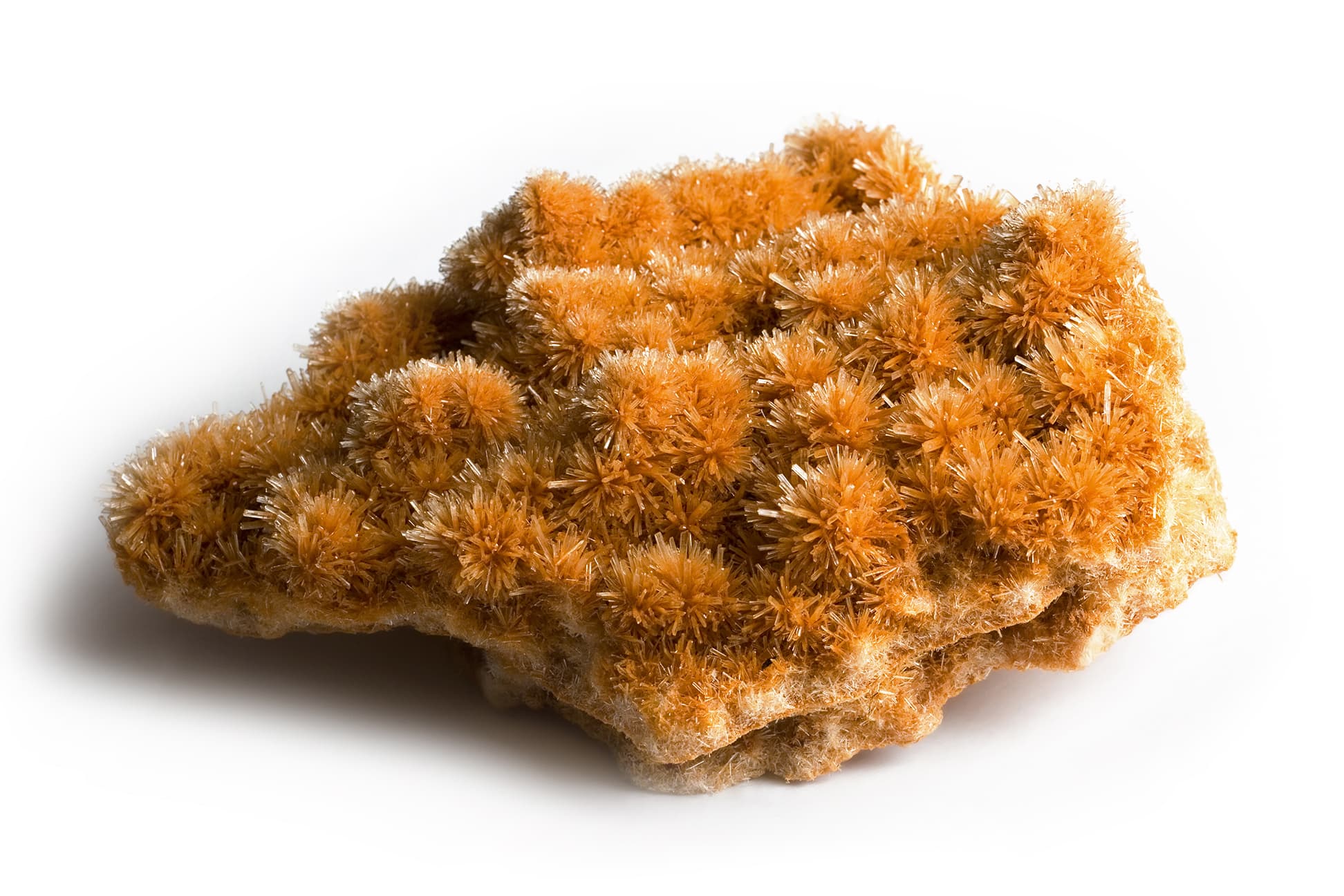
Gypsum var. Selenite
Image: JJ Harrison (https://www.jjharrison.com.au/) (CC BY-SA 2.5)
Mineral NameGypsum var. Selenite
Chemical FormulaCaSO₄·2H₂O
Mohs Hardness2
Crystal Systemmonoclinic
Lustervitreous
Streak Colorwhite
Cleavageperfect on {010}, good on {111}, distinct on {100}
Fractureconchoidal to uneven
Specific Gravity2.32
Colorsorange, brown, colorless, white, yellow
Transparencytransparent to translucent
Type LocalityAndamooka Ranges - Lake Torrens area, South Australia
Mineral GroupSulfates
Usesplaster, drywall, fertilizer, sculpture, collector
Associated Mineralshalite, anhydrite, calcite, dolomite, sulfur
Rarityuncommon
Description
This specimen features a cluster of radiating, acicular (needle-like) orange-brown selenite crystals, forming a spiky, flower-like aggregate on a matrix. The individual crystals are slender and exhibit a vitreous luster.
Geological Context
Selenite, a variety of gypsum, typically forms in evaporitic sedimentary environments such as drying lakes, lagoons, and sabkhas, where calcium sulfate precipitates from supersaturated brines. It can also be found in caves or as a secondary mineral in some ore deposits.


