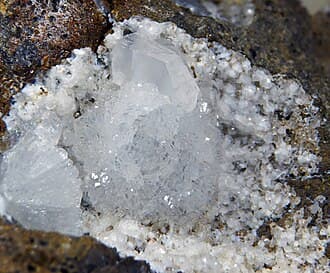
Gypsum (Alabaster variety)
Image: James Petts from London, England (CC BY-SA 2.0)
Mineral NameGypsum (Alabaster variety)
Chemical FormulaCaSO4·2H2O
Mohs Hardness2
Crystal Systemmonoclinic
Streak Colorwhite
Cleavageperfect in one direction, good in two others
Fractureconchoidal to uneven
Specific Gravity2.31
Colorswhite, pink, pale orange
Transparencytranslucent
Type LocalityWidespread, notable localities include Volterra (Italy), Egypt, UK, USA
Mineral GroupSulfates
Usessculptures, ornamental objects, plaster, drywall, fertilizer
Associated Mineralshalite, anhydrite, sulfur, calcite, dolomite
Raritycommon
Description
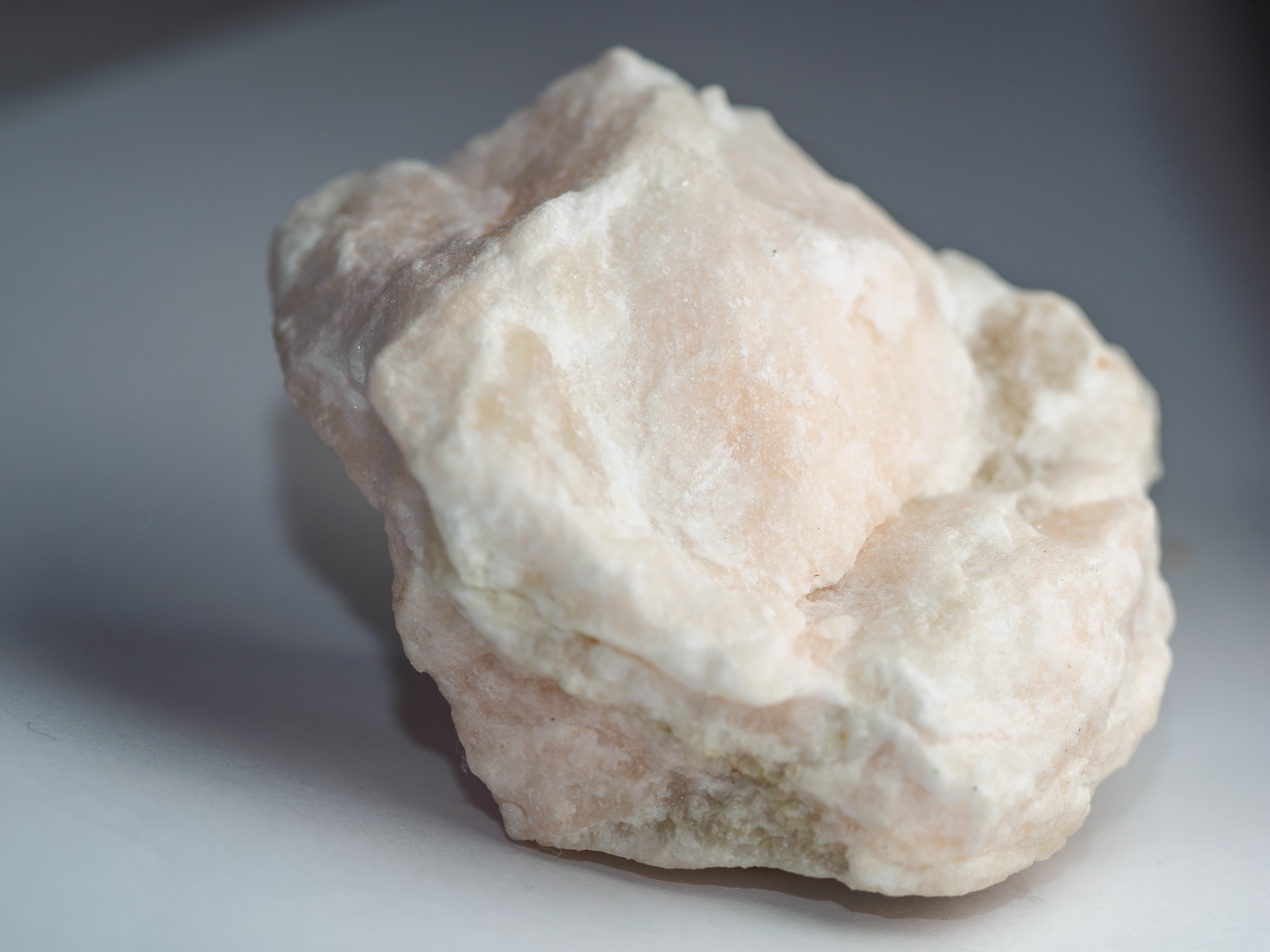
A massive, fine-grained specimen of alabaster, appearing predominantly white with subtle pinkish-orange tones, exhibiting a soft, earthy texture and an irregular, rounded form.
Geological Context
Gypsum forms as an evaporite mineral in sedimentary environments, precipitating from highly saline waters in shallow marine basins or salt lakes as water evaporates. Alabaster is a compact, fine-grained variety of gypsum often found in these deposits.