Smithsonite
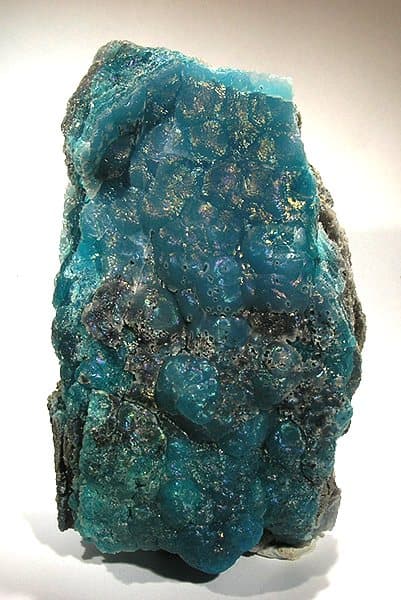
Image: Robert M. Lavinsky (CC BY-SA 3.0)
Mineral NameSmithsonite
Chemical FormulaZnCO₃
Mohs Hardness4.5
Crystal Systemtrigonal
Lustervitreous
Streak Colorwhite
Cleavageperfect rhombohedral {1011}
Fractureuneven
Specific Gravity4.4
Colorsblue-green, teal
Transparencytranslucent
Type LocalityChoix, Municipio de Choix, Sinaloa, Mexico
Mineral GroupCarbonates
Usescollector, minor zinc ore, jewelry
Associated Mineralshemimorphite, cerussite, anglesite, malachite, azurite
Rarityuncommon
Description
This specimen features vibrant blue-green botryoidal masses with a waxy to vitreous luster, exhibiting a subtle iridescent sheen across its bubbly, grape-like surface. The color is a striking robin's egg blue, characteristic of fine smithsonite.
Geological Context
Smithsonite is a secondary mineral formed in the oxidized zone of zinc-rich ore deposits, typically found in limestone or dolomite host rocks where it results from the alteration of primary zinc sulfides like sphalerite.