Heliodor
Image: DonGuennie (G-Empire The World Of Gems) (CC BY-SA 4.0)
Mineral NameHeliodor
Chemical FormulaBe3Al2(SiO3)6
Mohs Hardness7.5
Crystal Systemhexagonal
Lustervitreous
Streak Colorwhite
Cleavageimperfect basal {0001}
Fractureconchoidal to uneven
Specific Gravity2.69
Colorsgolden-yellow, yellow-green
Transparencytransparent
Type LocalityBrazil, Namibia, Madagascar, Russia, Ukraine
Mineral GroupSilicates
Usesjewelry, collector
Associated Mineralsquartz, feldspar, muscovite, tourmaline, topaz
Rarityuncommon
Description
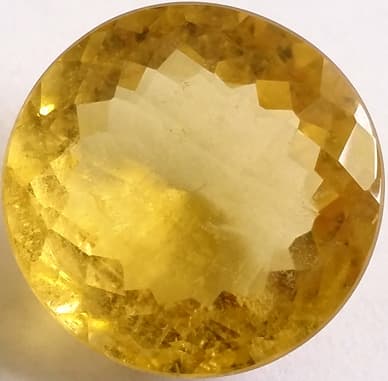
This image displays a round, faceted heliodor gemstone, showcasing a vibrant golden-yellow color and excellent transparency.
Geological Context
Heliodor, a variety of beryl, typically forms in granitic pegmatites and hydrothermal veins, often crystallizing during the late stages of magmatic activity.