Image: <a rel="nofollow" class="external text" href="https://www.flickr.com/people/47445767@N05">James St. John</a> (CC BY 2.0)
cubiccommonSilicates (Nesosilicates)
Garnet
X₃Y₂(SiO₄)₃ (where X = Ca, Mg, Fe²⁺, Mn²⁺; Y = Al, Fe³⁺, Cr³⁺)
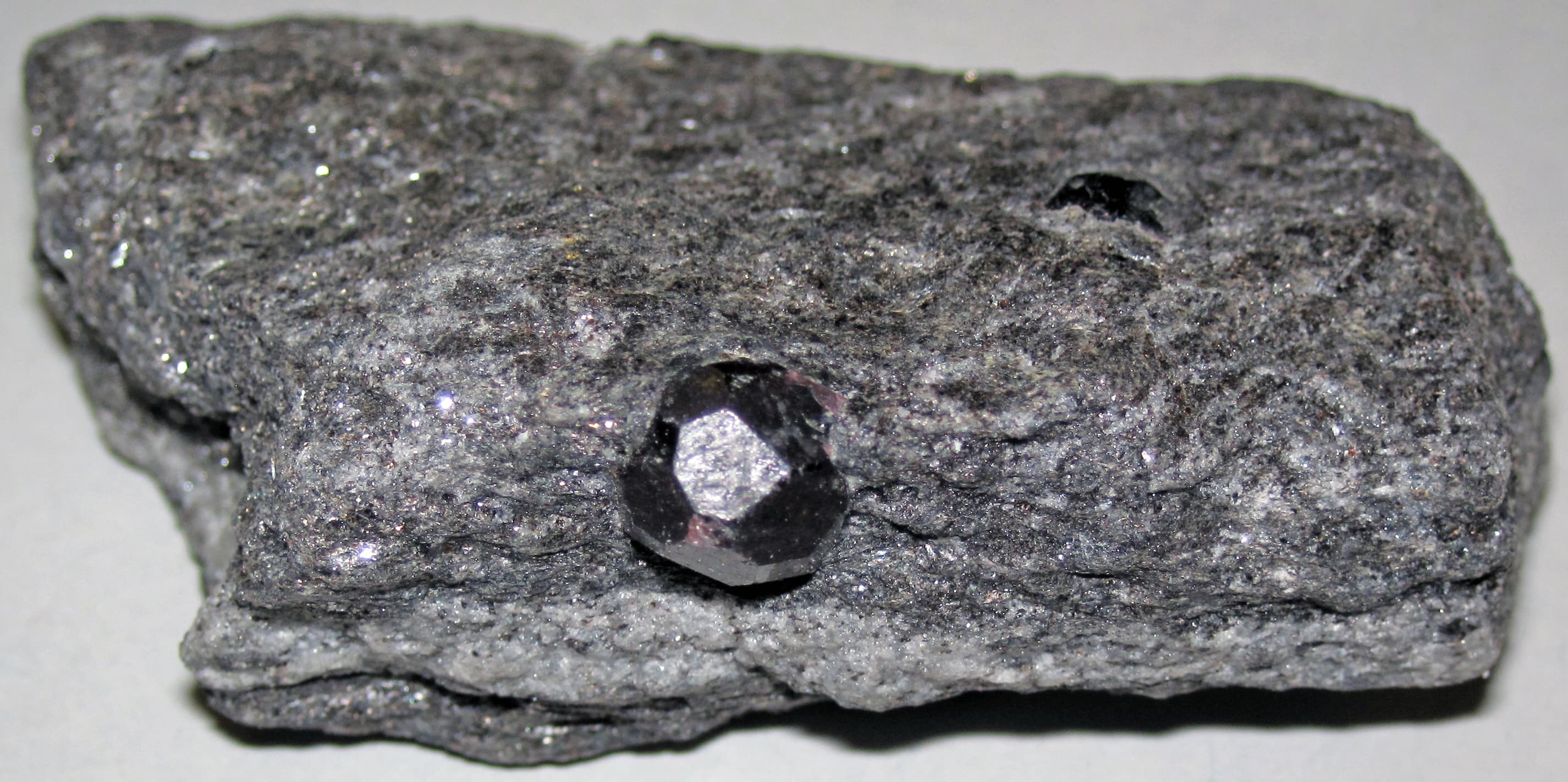
Garnet typically forms distinct, often euhedral dodecahedral or trapezohedral crystals, commonly reddish-brown to dark red. In this image, it appears as dark, reddish-brown, somewhat rounded crystals embedded within a foliated schist.
Garnet Physical Properties
Mohs Hardness
7Crystal System
cubicLuster
vitreousStreak Color
whiteCleavage
noneFracture
conchoidal to unevenSpecific Gravity
3.8Colors
red, orange, yellow, green, purple, brown, black, pink, colorlessTransparency
transparent to opaqueType Locality
Garnet Ledge, Wrangell, southeastern Alaska, USAMineral Group
Silicates (Nesosilicates)Uses
jewelry, abrasive, waterjet cutting, filtration media, collectorAssociated Minerals
quartz, mica, feldspar, staurolite, kyaniteRarity
commonGeological Context
Garnets are characteristic minerals of many metamorphic rocks, especially schists and gneisses, forming under a wide range of pressure and temperature conditions during regional metamorphism. This specific sample is from a Late Cretaceous schist formed in Alaska.


