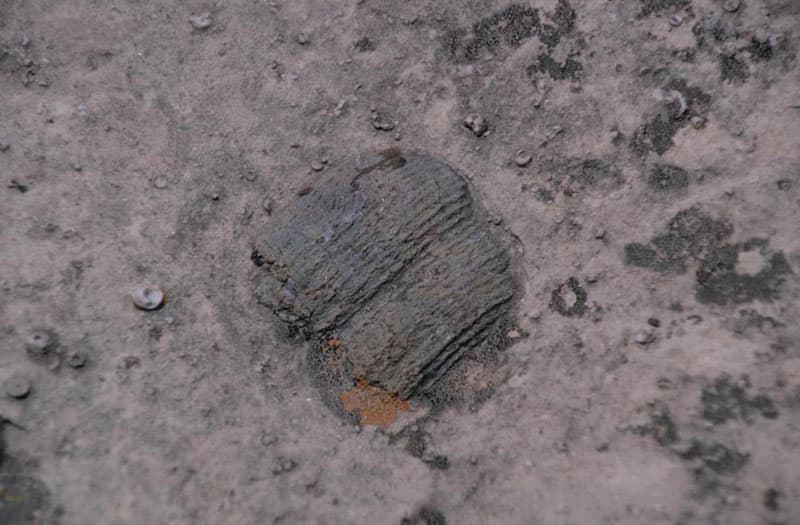
Crinoid Fossil
Image: National Park Service (Public domain)
Mineral NameCrinoid Fossil
Chemical FormulaCaCO3
Mohs Hardness3
Crystal Systemtrigonal
Lusterdull
Streak Colorwhite
Cleavageperfect rhombohedral
Fractureconchoidal to uneven
Specific Gravity2.71
Colorsdark grey, brown, tan
Transparencyopaque
Type LocalityKaibab Formation, Grand Canyon National Park, United States
Mineral GroupCarbonates (as fossilized material)
Usesscientific study, collector specimens, educational displays
Associated Mineralsbrachiopods, calcite, limestone
Raritycommon
Description
The image shows a fossilized crinoid columnal, appearing as a dark grey to brown, ribbed cylindrical segment embedded in a lighter, tan-colored sedimentary rock matrix, with some orange-brown discoloration around it.
Geological Context
Crinoids were marine invertebrates that lived attached to the seafloor, forming extensive 'sea lily' beds. These fossils are found in the Permian-aged Kaibab Formation, which represents a shallow marine environment where these organisms thrived and were subsequently buried and preserved.


