Agate
Image: Brandon Menth (CC BY 3.0)
Mineral NameAgate
Chemical FormulaSiO2
Mohs Hardness7
Crystal Systemtrigonal
Lusterwaxy
Streak Colorwhite
Cleavagenone
Fractureconchoidal
Specific Gravity2.65
Colorsred, orange, brown, white
Transparencytranslucent
Type LocalityWorldwide, notable localities include Brazil, Uruguay, Mexico, USA
Mineral GroupSilicates
Usesjewelry, ornamental objects, collector
Associated Mineralsquartz, calcite, zeolites
Raritycommon
Description
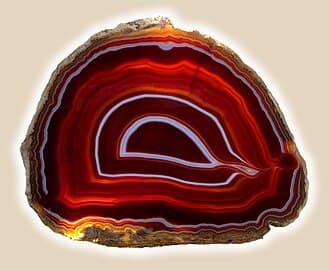
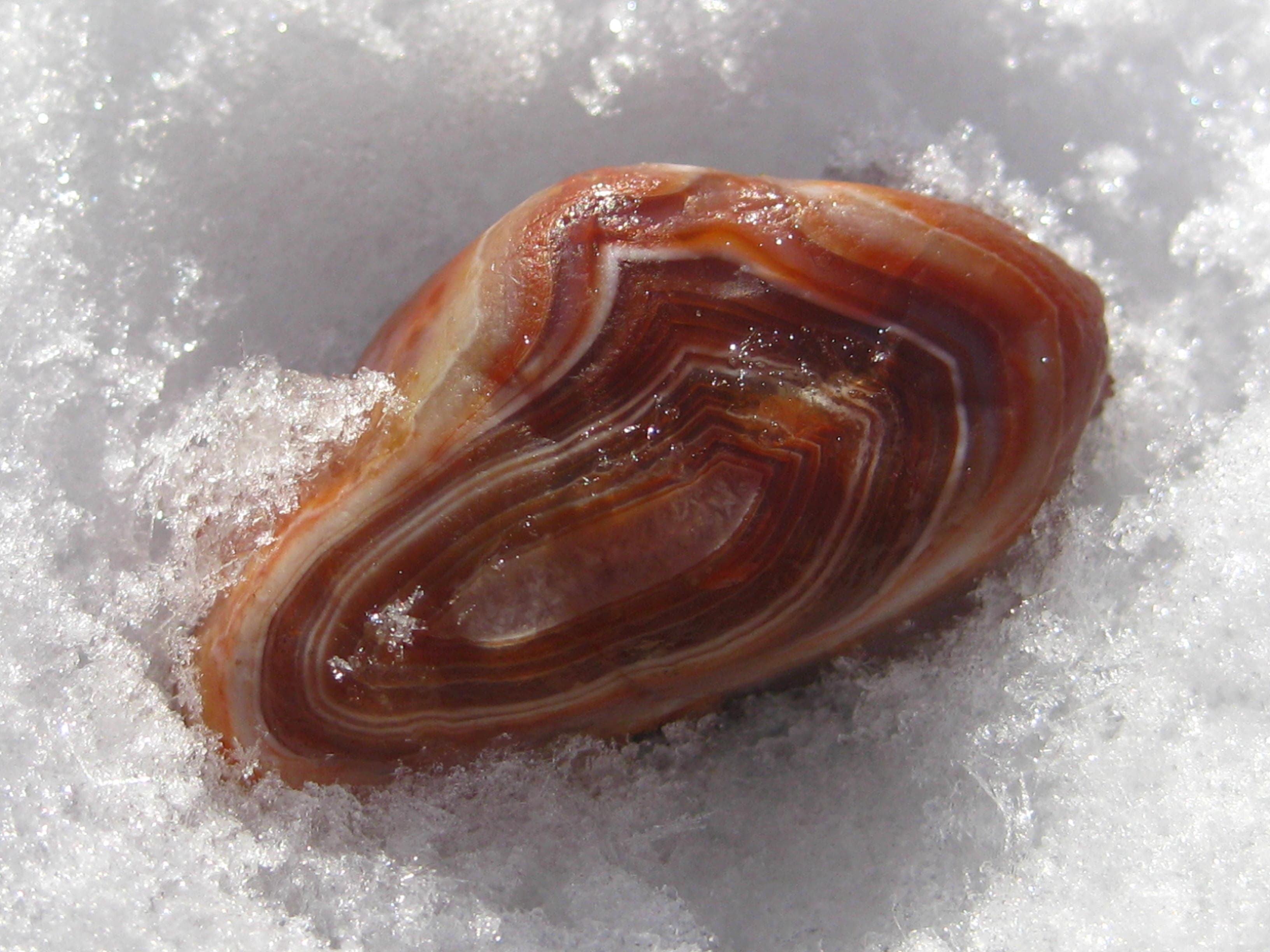
This agate specimen displays distinct concentric banding in shades of reddish-brown, orange, and white, forming an ovoid shape. The surface appears somewhat polished or water-worn, revealing the intricate patterns within.
Geological Context
Agate typically forms in the cavities of volcanic rocks (vesicles or amygdules) or sometimes in sedimentary rocks, through the rhythmic deposition of silica-rich fluids. These fluids precipitate layers of chalcedony, often with varying impurities that create the characteristic banding.