Conglomerate
Image: Pascal Dihé (CC BY-SA 4.0)
Mineral NameConglomerate
Chemical FormulaConglomerate is a rock composed of various minerals and rock fragments, so it does not have a single chemical formula. Its composition is highly variable.
Mohs HardnessVaries greatly depending on the clasts and cement; quartz clasts are 7, but the overall rock's resistance can be lower.
Streak ColorNot applicable for a rock.
CleavageNot applicable for a rock; cleavage refers to mineral properties.
FractureIrregular to conchoidal, often breaking across clasts or along the cement.
Specific Gravity2.65
Colorsgreenish-gray, gray, brown, red, white
Transparencyopaque
Type LocalityGreat Elmersberg near Eppelborn, Dirmingen, Saarland, Germany
Mineral GroupSedimentary rock (clastic)
Usesconstruction aggregate, road base, building stone, landscaping
Associated Mineralsquartz, feldspar, chert, various lithic fragments, silica, calcite, iron oxides, clay minerals
Raritycommon
Description
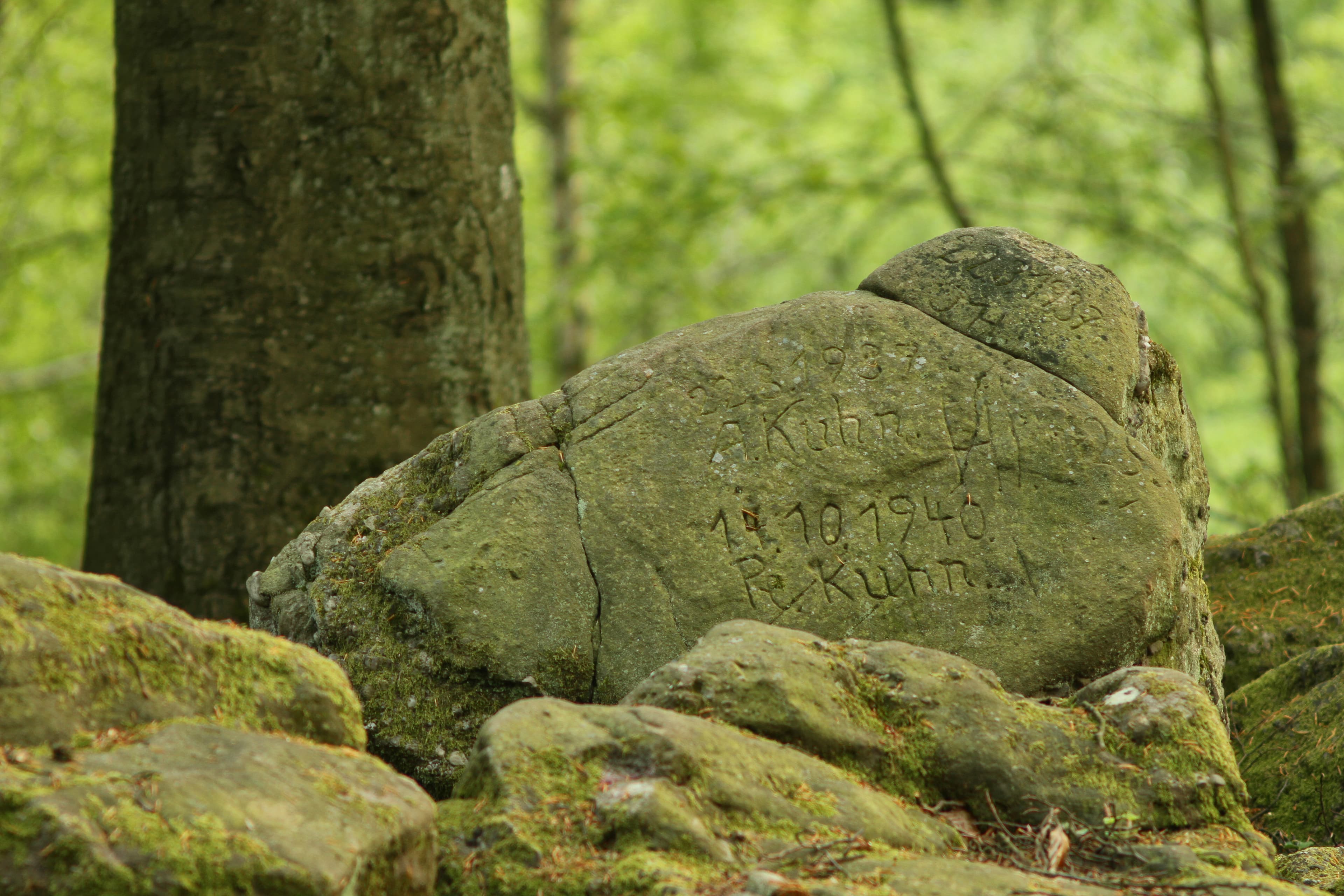
The image shows a large, weathered block of conglomerate, heavily covered in green moss and lichen, with some carvings visible on its surface. The rock appears to be composed of rounded clasts cemented together.
Geological Context
Conglomerates are clastic sedimentary rocks formed from the lithification of rounded gravel and pebbles, cemented together by a matrix of sand, silt, or clay. They typically form in high-energy environments such as riverbeds, beaches, or glacial outwash plains where coarse sediments are transported and deposited.


