Quartz
Image: “Jon Zander (Digon3)” (CC BY-SA 3.0)
Mineral NameQuartz
Chemical FormulaSiO2
Mohs Hardness7
Crystal Systemtrigonal
Lustervitreous
Streak Colorwhite
Cleavagenone
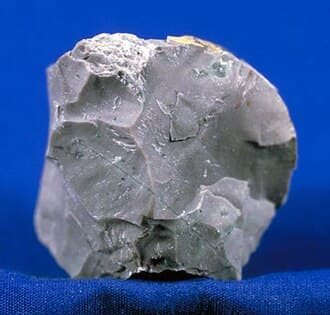
Fractureconchoidal
Specific Gravity2.65
Colorswhite, off-white, light brown
Transparencytranslucent
Type LocalityWorldwide (specific locality unknown for this specimen)
Mineral GroupSilicates
Usesjewelry, industrial, collector, electronics
Associated Mineralsfeldspar, mica, calcite, pyrite
Raritycommon
Description
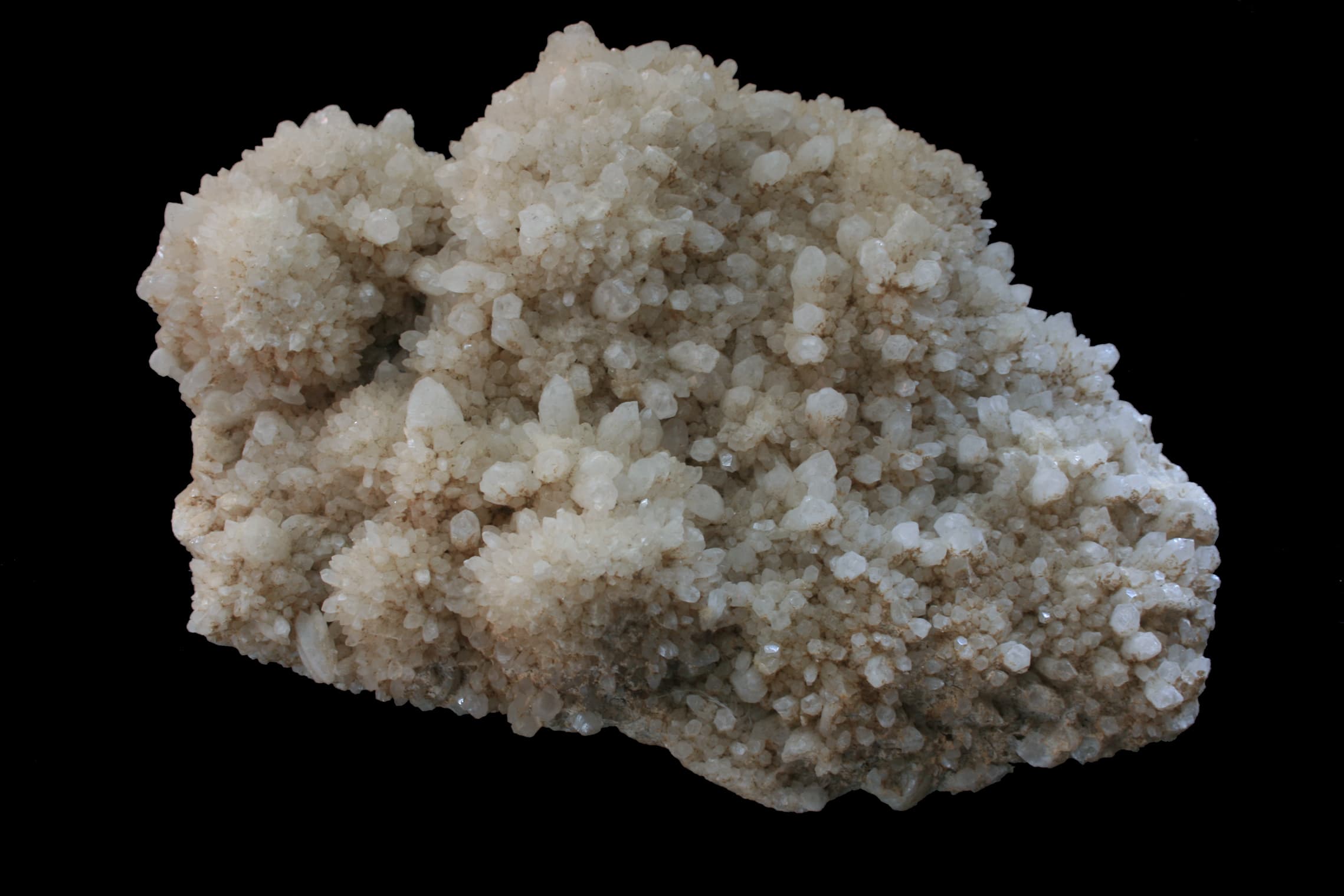
This specimen features a druzy aggregation of small, interlocking quartz crystals, forming a botryoidal or drusy crust. The crystals are mostly white to off-white, with some areas showing light brown discoloration, likely from iron staining or matrix material.
Geological Context
Quartz is one of the most abundant minerals in the Earth's crust, forming in a wide range of geological environments including igneous, metamorphic, and sedimentary rocks. It commonly crystallizes from hydrothermal solutions in veins and geodes, or as a primary component of granites and sandstones.