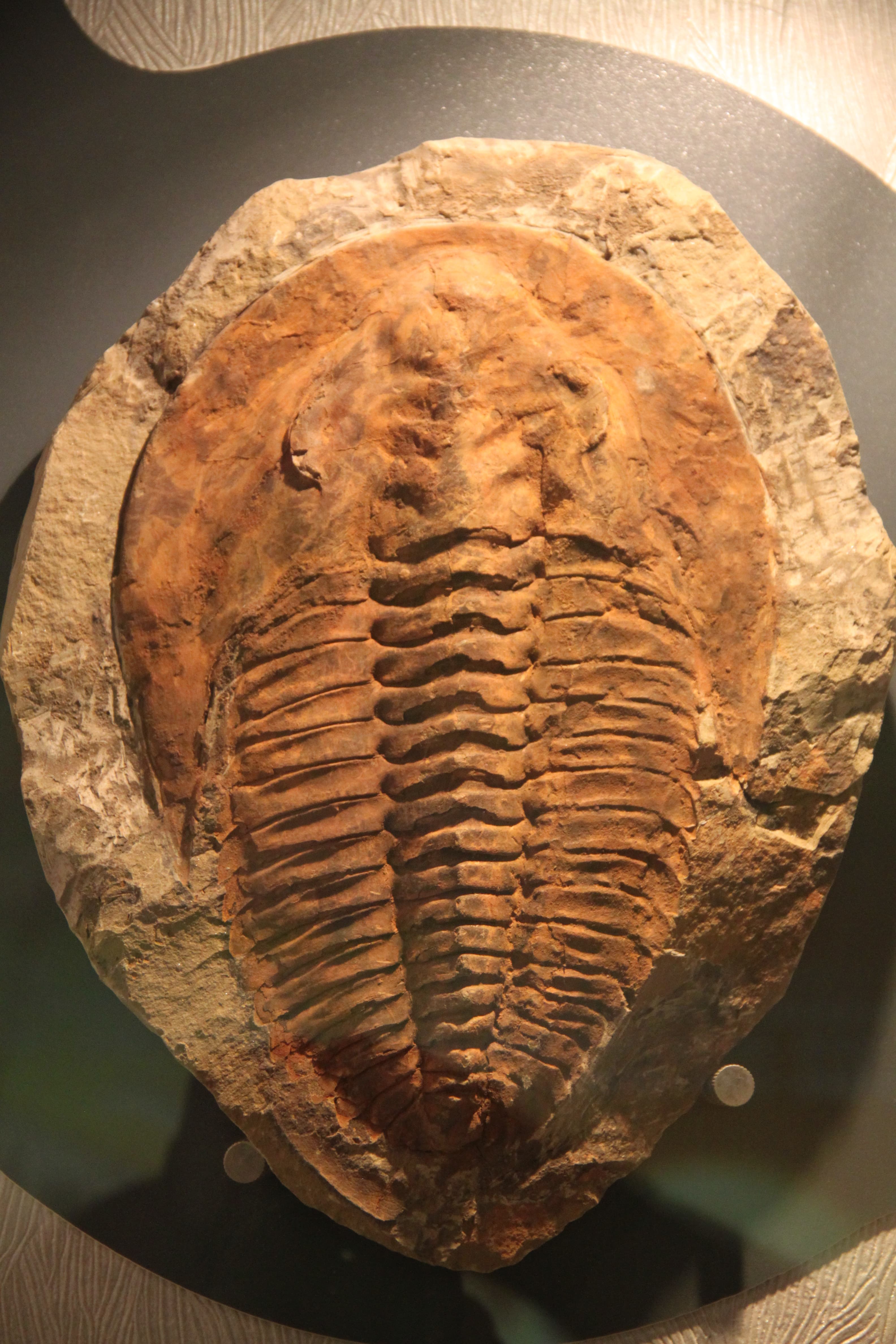
Trilobite Fossil
Image: Gary Todd (CC0)
Mineral NameTrilobite Fossil
Chemical FormulaPrimarily CaCO3 (calcite) or SiO2 (silica) due to mineral replacement, often with iron oxides; original exoskeleton was chitin.
Mohs Hardness3
Streak ColorWhite to light brown
CleavageN/A (no distinct cleavage for the fossil itself, cleavage would be of the surrounding matrix rock if present)
FractureUneven to conchoidal (depending on replacement mineral and matrix)
Specific Gravity2.7
Colorsreddish-brown, orange, tan, beige
TransparencyOpaque
Type LocalityHenan Geological Museum, Zhengzhou, China (display location; original fossil locality unknown from metadata)
Mineral GroupFossil (preserved organic remains)
Usesscientific study, education, collector item, museum display
Associated Mineralscalcite, quartz, iron oxides, limestone (matrix), shale (matrix)
Rarityuncommon
Description
A well-preserved, reddish-brown trilobite fossil, displaying distinct segmentation of the cephalon, thorax, and pygidium, embedded in a lighter tan sedimentary rock matrix.
Geological Context
Trilobites were marine arthropods that lived from the early Cambrian to the end of the Permian period. This fossil formed when the trilobite's exoskeleton was buried in sediment, and over millions of years, organic material was replaced by minerals, preserving its detailed structure within sedimentary rock.


