Travertine
Image: RAFIK 24 (CC BY-SA 3.0)
Mineral NameTravertine
Chemical FormulaCaCO3
Mohs Hardness3
Crystal Systemtrigonal
Lusterdull
Streak Colorwhite
Cleavageperfect rhombohedral (for constituent calcite)
Fractureuneven
Specific Gravity2.71
Colorswhite, cream, tan, brown, reddish-brown, greenish-brown, black
Transparencyopaque
Type LocalityHammam Debagh, Ghelma Province, Algeria
Mineral GroupCarbonates
Usesbuilding material, decorative stone, sculpture
Associated Mineralscalcite, aragonite, iron oxides
Raritycommon
Description
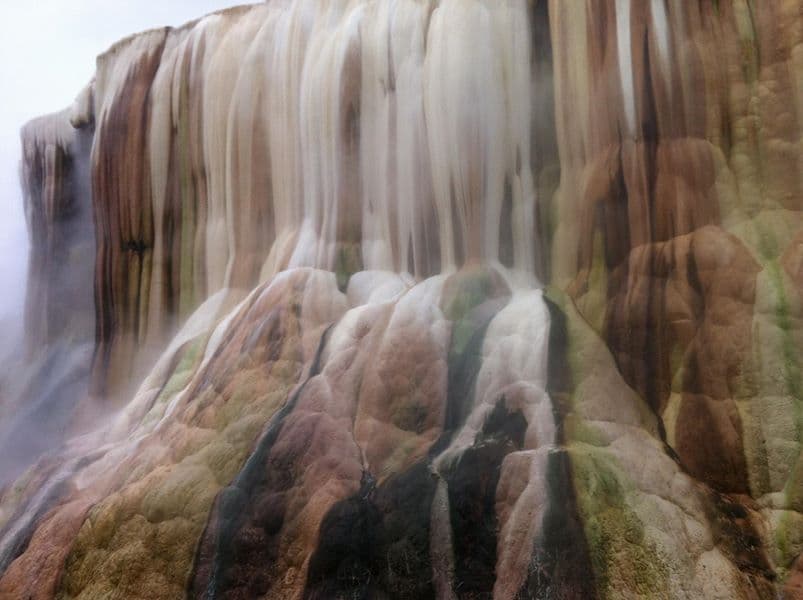
A large, layered geological formation with water flowing over it, displaying various shades of white, cream, brown, and green, characteristic of hot spring deposits.
Geological Context
Travertine forms from the rapid precipitation of calcium carbonate from supersaturated geothermal waters at the Earth's surface, typically in hot springs or caves. Its formation is often influenced by biological activity such as algae and bacteria.