Trilobite Fossil
Image: Juan Carlos Fonseca Mata (CC BY-SA 4.0)
Mineral NameTrilobite Fossil
Chemical FormulaVariable, commonly CaCO3 (calcite), SiO2 (quartz), or FeS2 (pyrite) depending on diagenesis and host rock composition.
Streak Colorvariable (often white, gray, or brown, depending on replacing mineral and matrix)
CleavageN/A (depends on the replacing mineral and matrix rock, not a property of the fossil itself)
Fracturevariable (often conchoidal if silicified, uneven, or earthy depending on composition)
Colorsbrown, tan, gray, black, reddish-brown
Transparencyopaque
Type LocalitySaltillo, Coahuila, Mexico
Mineral GroupNot a mineral; a fossilized organism. Composed of various mineral groups depending on preservation, e.g., carbonates, silicates, sulfides.
Usesscientific study, education, collector's item
Associated Mineralscalcite, quartz, pyrite, limestone, shale, sandstone
Description
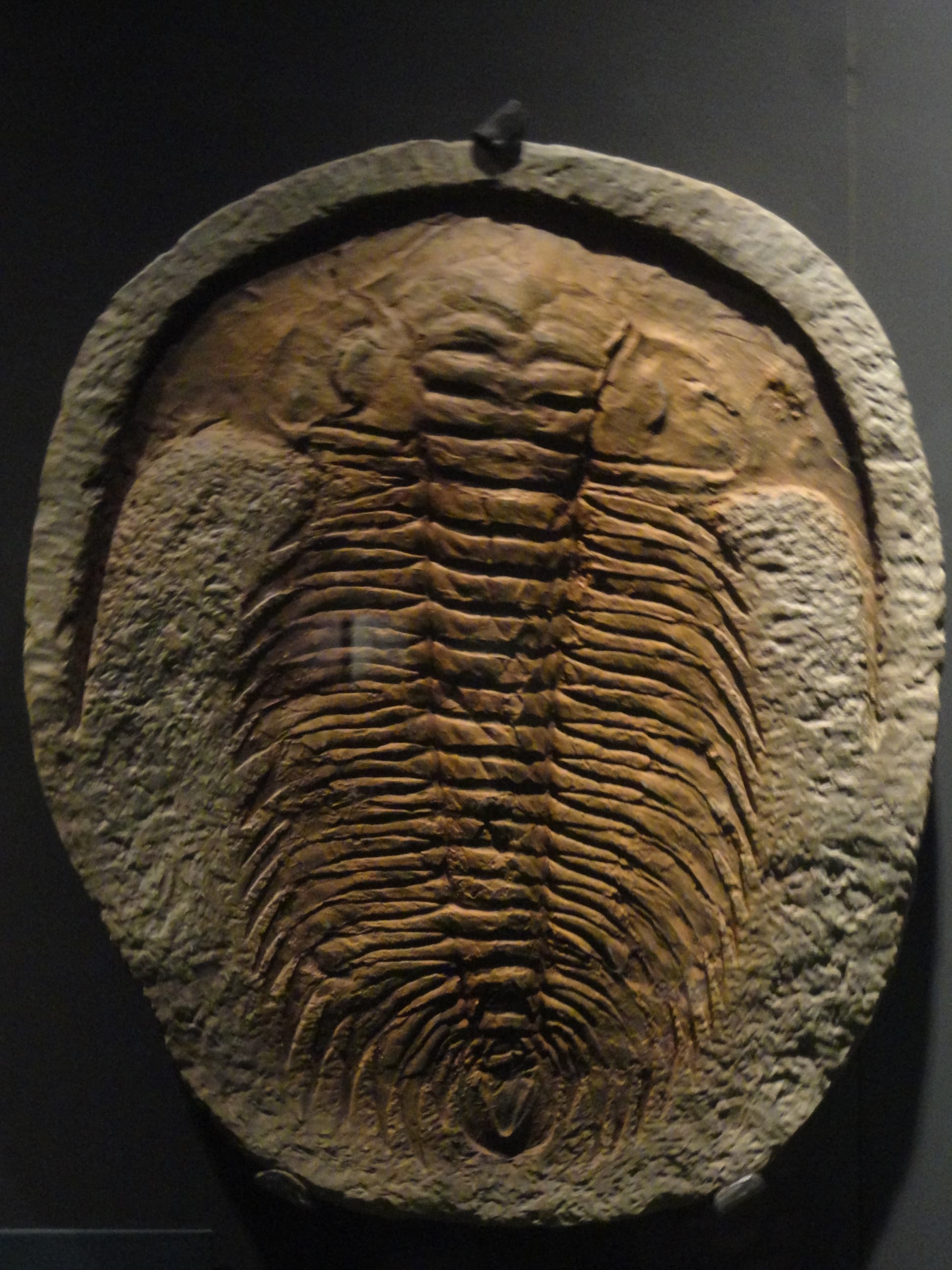
This image displays a well-preserved, oval-shaped trilobite fossil, likely a positive relief, exhibiting distinct segmentation of its cephalon, thorax, and pygidium. The fossil itself is a reddish-brown to tan color, embedded within a lighter gray-tan sedimentary rock matrix.
Geological Context
Trilobites were ancient marine arthropods that thrived during the Paleozoic Era. Their fossils are typically found in marine sedimentary rocks such as limestone, shale, and sandstone, formed when the organisms were rapidly buried and their organic remains were replaced by minerals over millions of years.