Shale
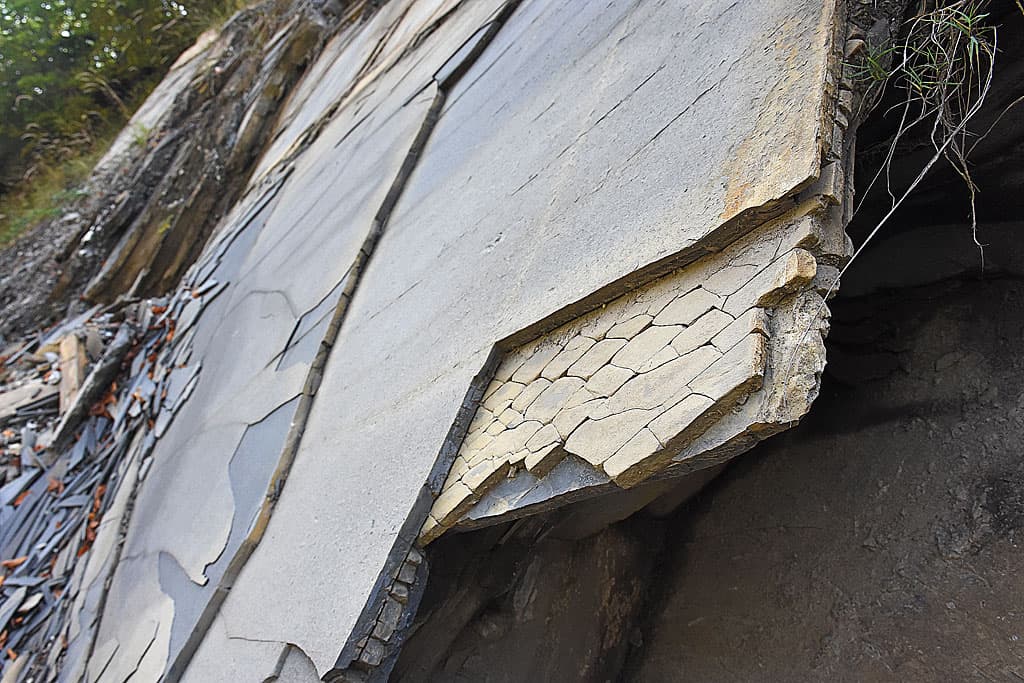
Image: Vid Pogacnik (CC BY-SA 4.0)
Mineral NameShale
Chemical FormulaVariable (primarily clay minerals, quartz, feldspar)
Mohs Hardness2.5
Crystal Systemamorphous
Streak ColorLight gray to dark gray
CleavageExhibits fissility (splits along bedding planes into thin layers)
FractureUneven, splintery
Specific Gravity2
Colorsgray, dark gray, black, red, green, brown
TransparencyOpaque
Type LocalityPotokgraben / Košutni potok, Carinthia, Austria
Mineral GroupSedimentary rock (clastic)
Usessource rock for hydrocarbons, building material, cement production, ceramics
Associated Mineralsclay minerals, quartz, feldspar, micas, organic matter
Raritycommon
Description
A fine-grained, clastic sedimentary rock, appearing in thin, parallel laminae, with a predominantly dark gray color. The outcrop shows distinct layering and fracturing.
Geological Context
Shale forms from the compaction of mud and clay particles in low-energy depositional environments such as lakes, river deltas, and deep ocean basins. It often preserves fossils and organic matter.