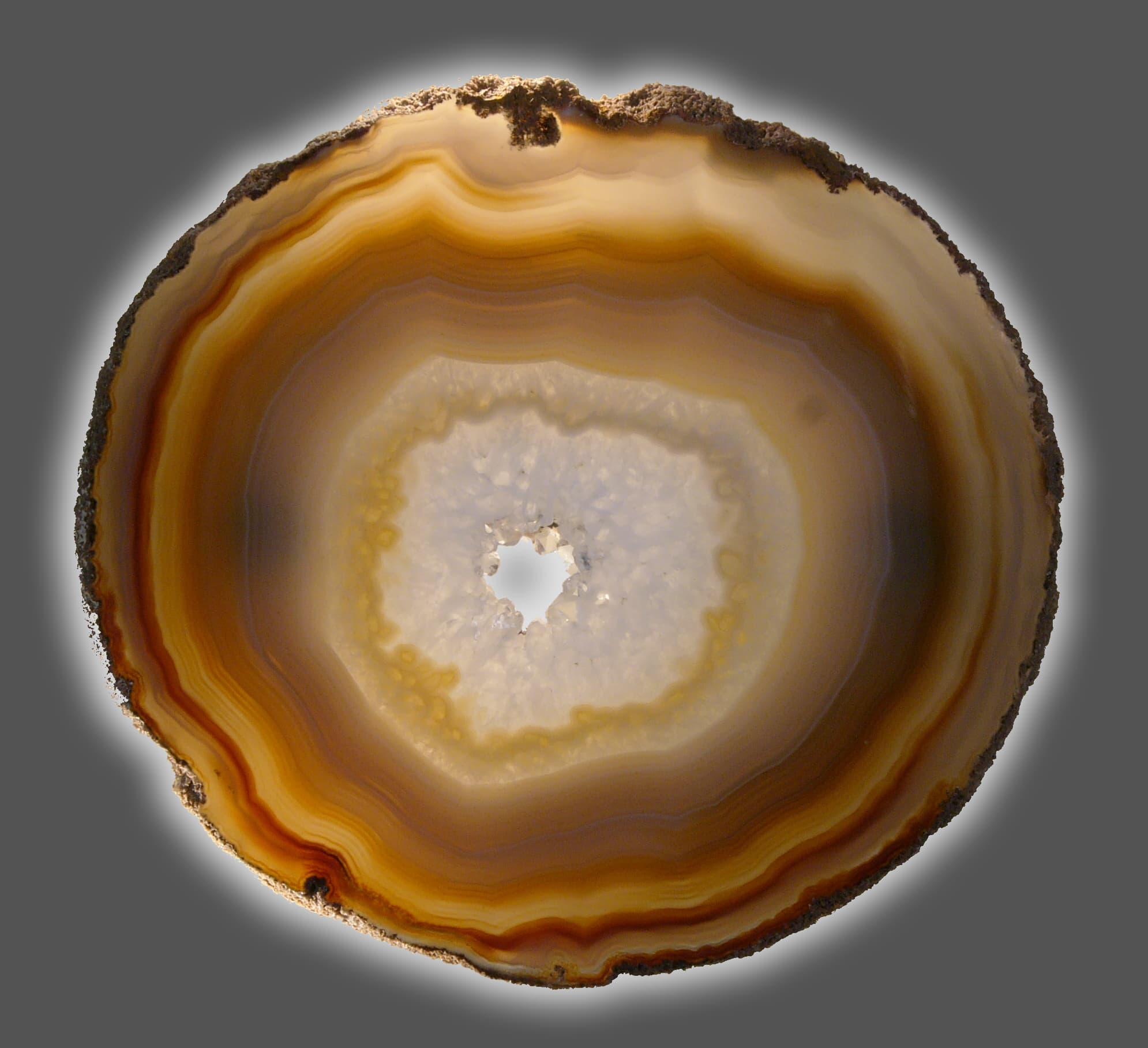
Agate
Image: Hannes Grobe (CC BY-SA 2.5)
Mineral NameAgate
Chemical FormulaSiO2
Mohs Hardness7
Crystal Systemtrigonal
Lusterwaxy
Streak Colorwhite
Cleavagenone
Fractureconchoidal
Specific Gravity2.65
Colorsbrown, orange, white, translucent
Transparencytranslucent
Type LocalityWorldwide
Mineral GroupSilicates
Usesjewelry, ornamental objects, collector
Associated Mineralsquartz, calcite, zeolites
Raritycommon
Description
This image displays a polished slice of agate, revealing concentric bands of brown, orange, and white chalcedony, with a central cavity (vug) lined with small, sparkling quartz crystals, all illuminated by transmitted light.
Geological Context
Agate typically forms in the cavities of volcanic rocks (such as basalt) or ancient lavas, where silica-rich fluids deposit successive layers of cryptocrystalline quartz (chalcedony) over time, often creating a central druzy quartz lining.


