Serpentinized Peridotite
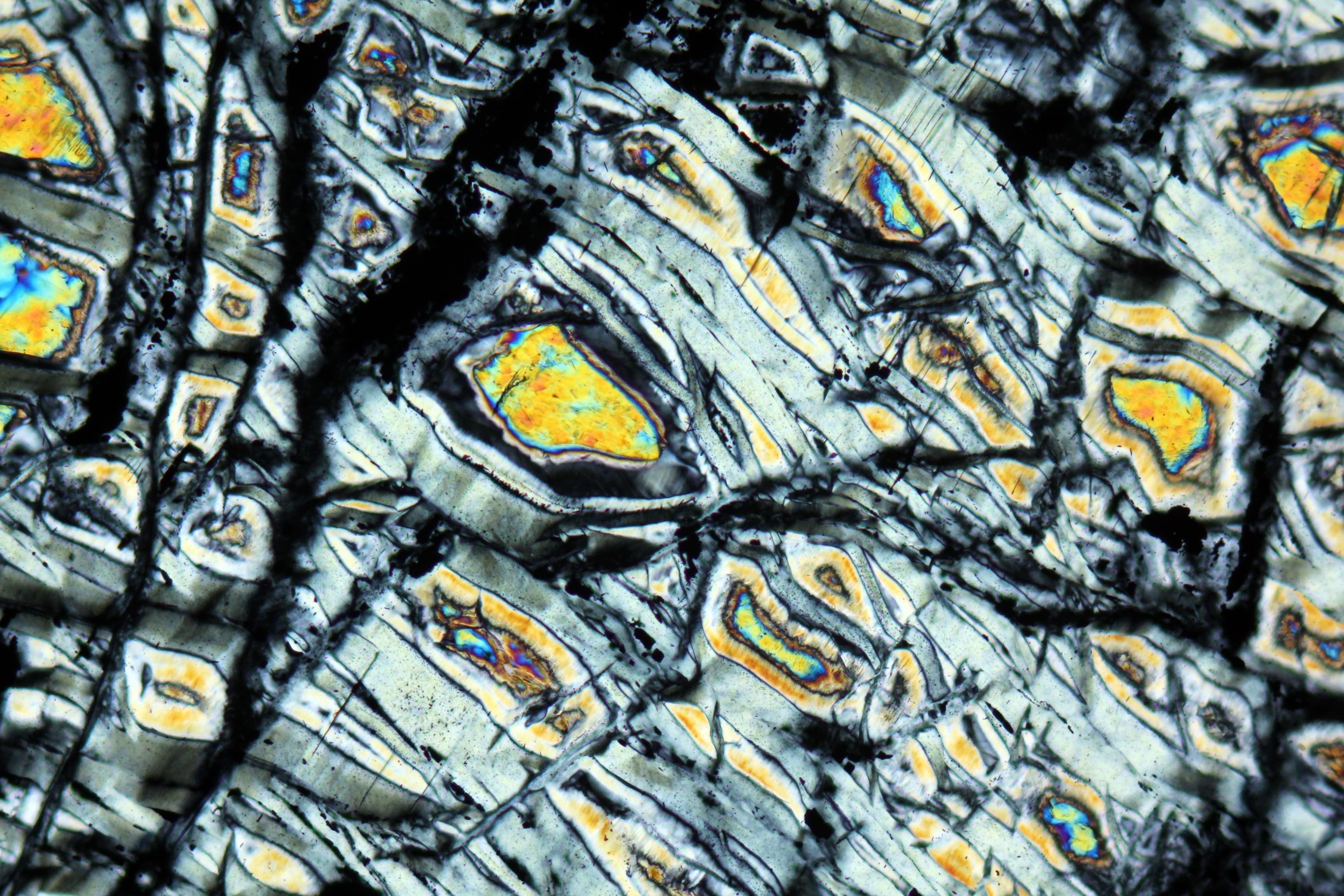
Image: Strekeisen (CC BY-SA 4.0)
Mineral NameSerpentinized Peridotite
Chemical FormulaMg₃Si₂O₅(OH)₄ (dominant serpentine)
Mohs Hardness3
Streak ColorWhite
CleavagePoor to absent
FractureConchoidal to splintery
Specific Gravity2.7
Colorsdark green, greenish-black, mottled green
TransparencyOpaque to translucent
Type LocalityWorldwide in ophiolite complexes and orogenic belts
Mineral GroupSilicates (rock)
Usesdecorative stone, building material, source of industrial minerals (e.g., chrysotile asbestos, talc)
Associated Mineralsolivine, serpentine group minerals, pyroxene, magnetite, chromite
Raritycommon
Description
This microscopic image, taken under crossed nicols, displays relict olivine grains appearing bright yellow with high interference colors, surrounded by a gray, fibrous groundmass of serpentine minerals.
Geological Context
Serpentinized peridotite forms from the hydrothermal alteration of ultramafic rocks like peridotite, originating from the Earth's mantle. This process, known as serpentinization, involves the reaction of olivine and pyroxene with water, typically occurring in oceanic crust or subduction zones.