Serpentinite
Image: Strekeisen (CC BY-SA 4.0)
Mineral NameSerpentinite
Chemical FormulaMg₃Si₂O₅(OH)₄ (general for serpentine group minerals)
Mohs Hardness2.5
Streak ColorWhite to pale green
CleavagePoor to good (variable, e.g., perfect basal in antigorite, good fibrous in chrysotile)
FractureSplintery/conchoidal/uneven
Specific Gravity2.55
Colorsgreen, yellowish-green, brownish-red, black
TransparencyTranslucent to opaque (transparent in thin section)
Type LocalityWorldwide (common in orogenic belts and oceanic crust)
Mineral GroupSilicates (Phyllosilicates)
Usesdecorative stone, carving material, industrial source of magnesium, source of chrysotile asbestos (historically)
Associated Mineralstalc, magnetite, chromite, magnesite, brucite, relict olivine, relict pyroxene
Raritycommon
Description
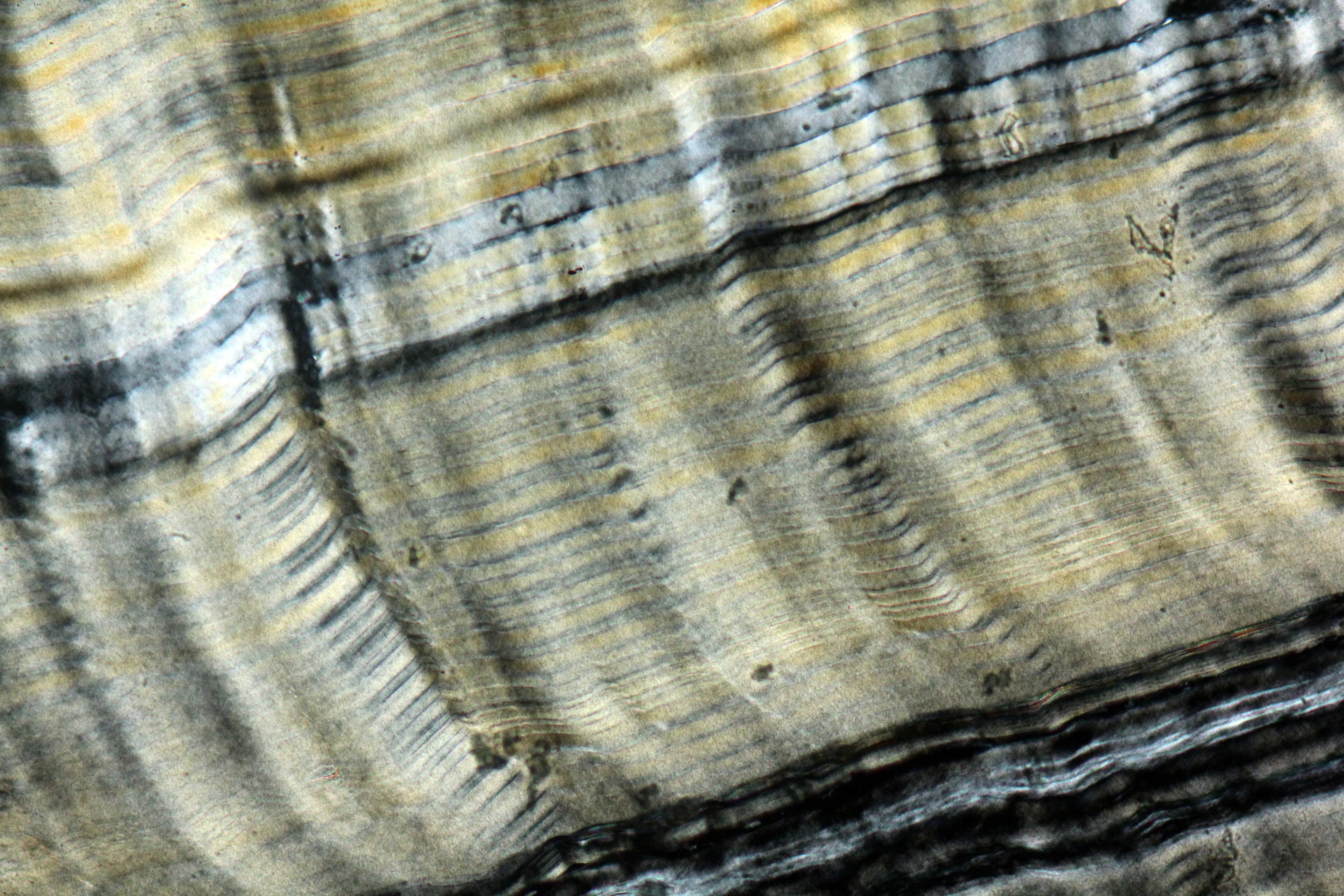
This microscopic image, taken under crossed nicols, displays the layered and fibrous textures characteristic of serpentinite, with varying shades of yellow, grey, and black indicating different mineral orientations and compositions within the serpentine vein.
Geological Context
Serpentinite is a metamorphic rock formed by the hydrothermal alteration (serpentinization) of ultramafic rocks like peridotite and dunite, typically found in oceanic crust, subduction zones, and orogenic belts.