Agate
Image: Veronika Ronkos (CC BY-SA 3.0)
Mineral NameAgate
Chemical FormulaSiO2
Mohs Hardness6.5
Crystal Systemtrigonal
Streak ColorWhite
CleavageNone
FractureConchoidal
Specific Gravity2.6
Colorsred, orange, yellow, white, brown, green
TransparencyTranslucent
Type LocalityWorldwide, notably Brazil, Uruguay, Mexico, USA
Mineral GroupSilicates
Usesjewelry, ornamental objects, collector's items, industrial applications
Associated Mineralsquartz, calcite, zeolites, opal
Raritycommon
Description
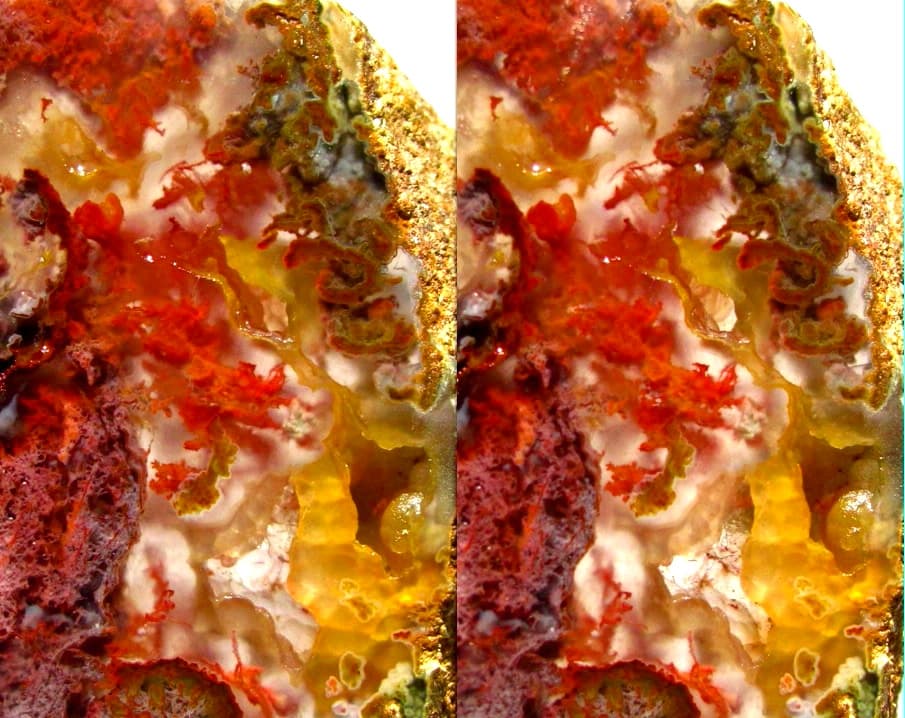
This agate slab exhibits vibrant, intricate patterns, including dendritic or moss-like formations in shades of red, orange, and yellow, set within a translucent white to clear chalcedony matrix. Some areas show botryoidal or stalactitic textures, indicating cavity filling.
Geological Context
Agate typically forms in the vesicles of volcanic rocks or in cavities within sedimentary rocks, where silica-rich hydrothermal solutions deposit successive layers of microcrystalline quartz, often incorporating other minerals or impurities to create its characteristic banding and patterns.