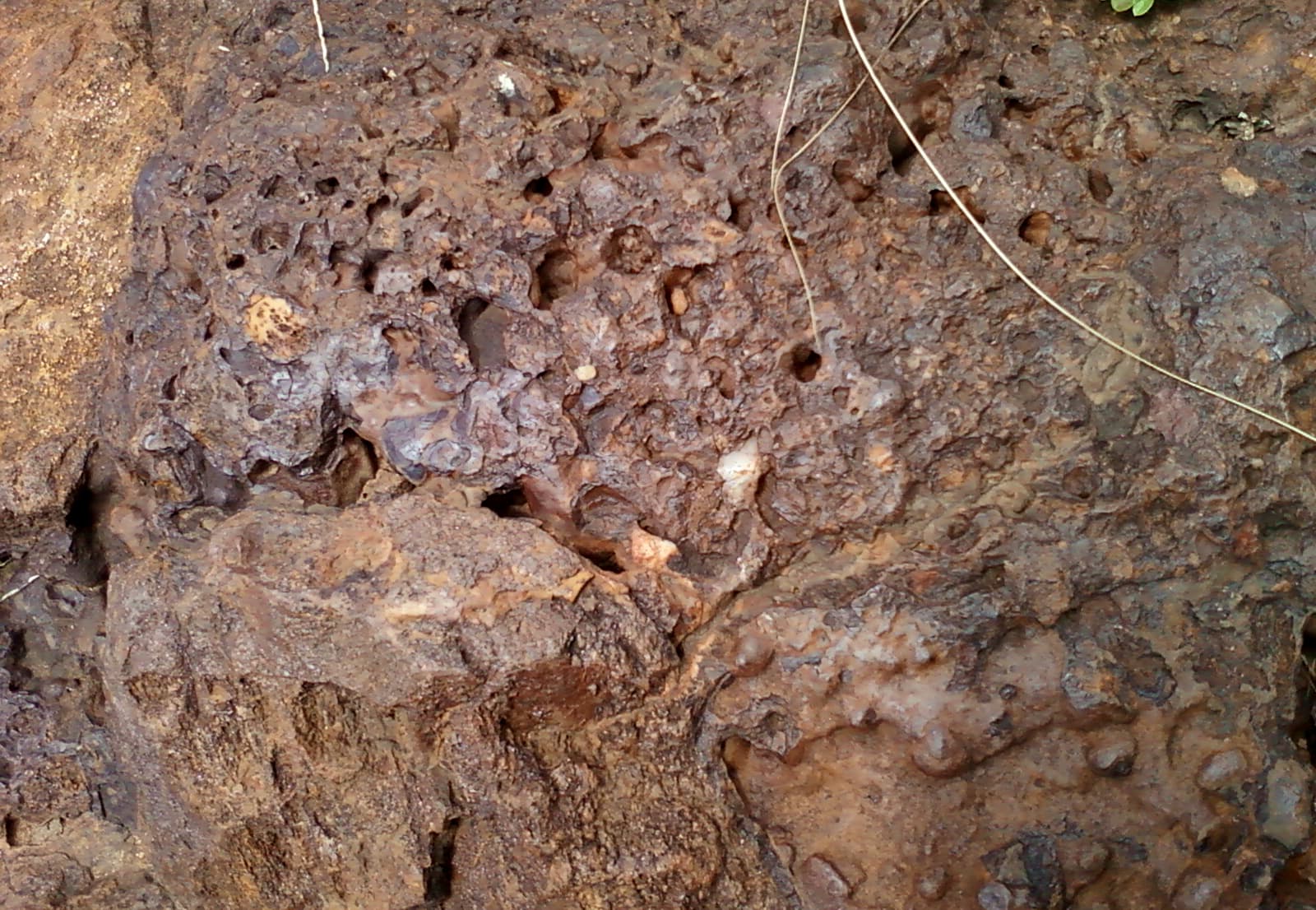
Scoria
Image: Adityamadhav83 (CC BY-SA 3.0)
Mineral NameScoria
Chemical FormulaVariable, primarily silicates of iron, magnesium, and calcium (mafic composition)
Mohs HardnessVariable (5-6.5 for constituent minerals), but the rock is brittle and friable due to high porosity
Streak ColorReddish-brown to black
CleavageNone (as a rock)
FractureUneven, highly irregular due to vesicles
Specific GravityTypically 1.0-2.0 (due to high porosity), solid material is 2.5-3.0
Colorsdark brown, reddish-brown, black, dark gray
TransparencyOpaque
Type LocalityRushikonda, Visakhapatnam, India (as pictured); common worldwide in volcanic regions
Mineral GroupIgneous rock (extrusive volcanic, pyroclastic)
Useslightweight aggregate, landscaping, gas grills, traction material
Associated Mineralsplagioclase, pyroxene, olivine, magnetite
Raritycommon
Description
This image displays a dark reddish-brown, highly vesicular igneous rock with an irregular, rough texture, characterized by numerous small to medium-sized holes (vesicles). The surface appears weathered with some lighter mineral inclusions.
Geological Context
Scoria forms during explosive volcanic eruptions when gas-rich magma is rapidly ejected and cools quickly, trapping gas bubbles within the solidifying rock. It is a common component of cinder cones and lava flows, often found in basaltic or andesitic volcanic settings.


