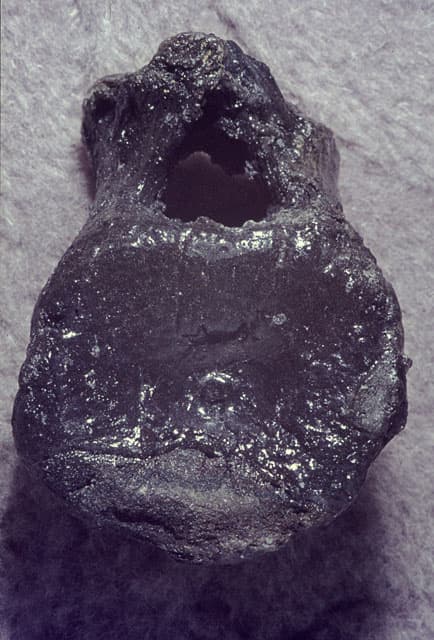
Plesiosaur Fossil
Image: John Rostron (CC BY-SA 2.0)
Mineral NamePlesiosaur Fossil
Chemical FormulaPrimarily calcium phosphate (hydroxyapatite) replaced and infused with various minerals such as pyrite (FeS2), calcite (CaCO3), or silica (SiO2)
Mohs Hardness3-7 (variable, depending on mineralization type; e.g., calcite 3, pyrite 6-6.5, silica 7)
Streak ColorDark gray to black
CleavageNone (due to aggregate nature)
FractureUneven to conchoidal
Specific Gravity2.5-5.0 (variable, depending on mineralization type; e.g., calcite 2.7, pyrite 4.8-5.0)
Colorsdark gray, black, brownish-black
TransparencyOpaque
Type LocalityUnder the Severn Bridge, Pilning and Severn Beach, UK
Mineral GroupFossilized organic material (bone)
Usesscientific study, educational, collector's item
Associated Mineralspyrite, calcite, silica, apatite, iron oxides
Rarityuncommon
Description
A dark, irregularly shaped plesiosaur vertebra, exhibiting a sub-metallic to dull luster on its surfaces, with some rough, granular textures.
Geological Context
This plesiosaur vertebra likely originated from marine sedimentary deposits of the Mesozoic Era (Jurassic or Triassic), where the organic bone material was replaced and infused by minerals over millions of years.


