Igneous rock (e.g., gabbro/diorite)
Image: Leo-setä (CC BY 2.0)
Mineral NameIgneous rock (e.g., gabbro/diorite)
Chemical FormulaMixture of silicates (e.g., (Ca,Na)(Al,Si)2Si2O8 for plagioclase, (Mg,Fe)SiO3 for pyroxene)
Mohs HardnessVariable (6-7 for dominant silicates)
Streak ColorNot applicable (microscopic view)
CleavageVisible in plagioclase (two directions at ~90 degrees) and some mafic minerals
FractureUneven to conchoidal (for individual minerals), overall rock shows fracturing
Specific GravityVariable (2.6-3.5)
Colorsgrey, white, brown, orange, blue, green, pink
TransparencyTransparent (in thin section)
Type LocalityUnknown
Mineral GroupSilicates
UsesBuilding material, aggregate, source of industrial minerals
Associated MineralsPlagioclase, pyroxene, amphibole, accessory silicates
Raritycommon
Description
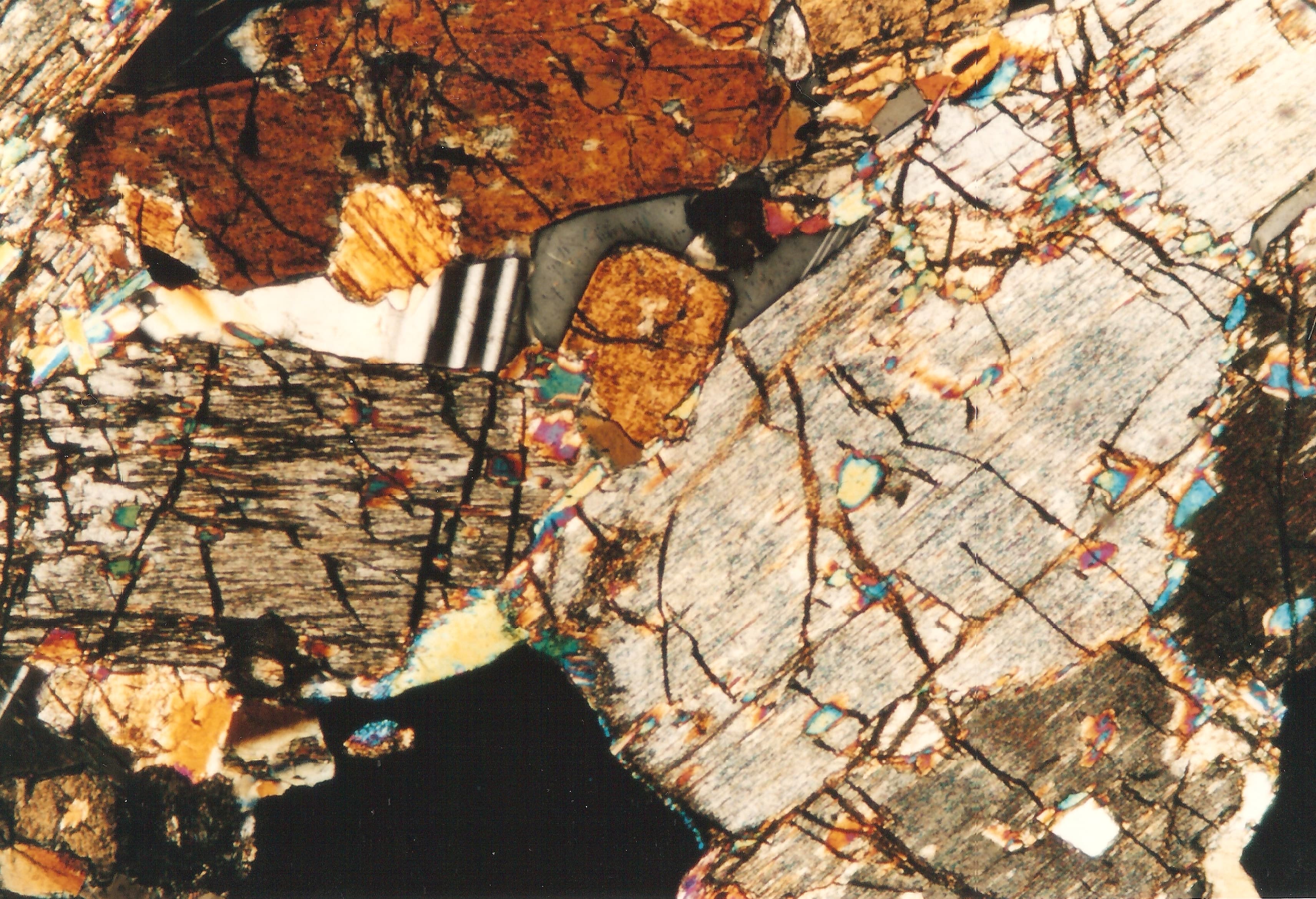
A microscopic image of a rock thin section under crossed-polarized light, displaying interlocking grains of various silicate minerals. Prominent features include plagioclase feldspar with polysynthetic twinning and low-order interference colors, alongside a mafic mineral exhibiting higher-order interference colors and a brownish hue.
Geological Context
This rock is likely igneous, formed from the crystallization of magma. Its mineral assemblage of plagioclase and mafic minerals suggests an intermediate to mafic composition, characteristic of rocks like gabbro or diorite.