Sandstone
Image: Roger Kidd (CC BY-SA 2.0)
Mineral NameSandstone
Chemical FormulaPrimarily SiO2 (quartz), with varying amounts of other minerals and cementing agents
Mohs Hardness7
Streak ColorWhite (from quartz), but often not practical to obtain from the rock
CleavageNone (as a rock); individual constituent minerals may exhibit cleavage
FractureGranular, individual grains may show conchoidal fracture
Specific Gravity2.65
Colorsreddish-brown, tan, white, gray, yellow
TransparencyOpaque (as a rock mass); individual grains can be translucent to transparent
Type LocalityLudstone, Shropshire, United Kingdom
Mineral GroupSedimentary Rock (Clastic)
Usesbuilding material, abrasive, glass manufacturing, aquifers
Associated Mineralsquartz, feldspar, micas, clay minerals, iron oxides
Raritycommon
Description
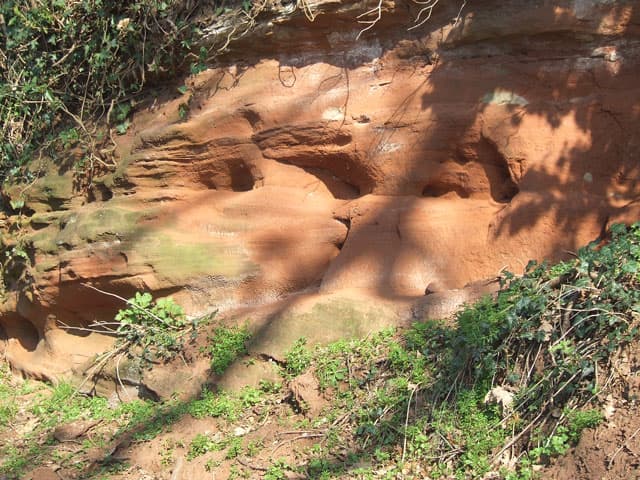
The image displays a reddish-brown sandstone outcrop, showing layered bedding and natural erosion features, partially covered by green vegetation.
Geological Context
Sandstone is a clastic sedimentary rock formed from the cementation of sand grains, typically in ancient riverbeds, deltas, or desert environments. The Triassic Bunter Sandstone in Shropshire is known for its distinctive reddish color and often contains colorful pebbles, indicating a fluvial depositional environment.