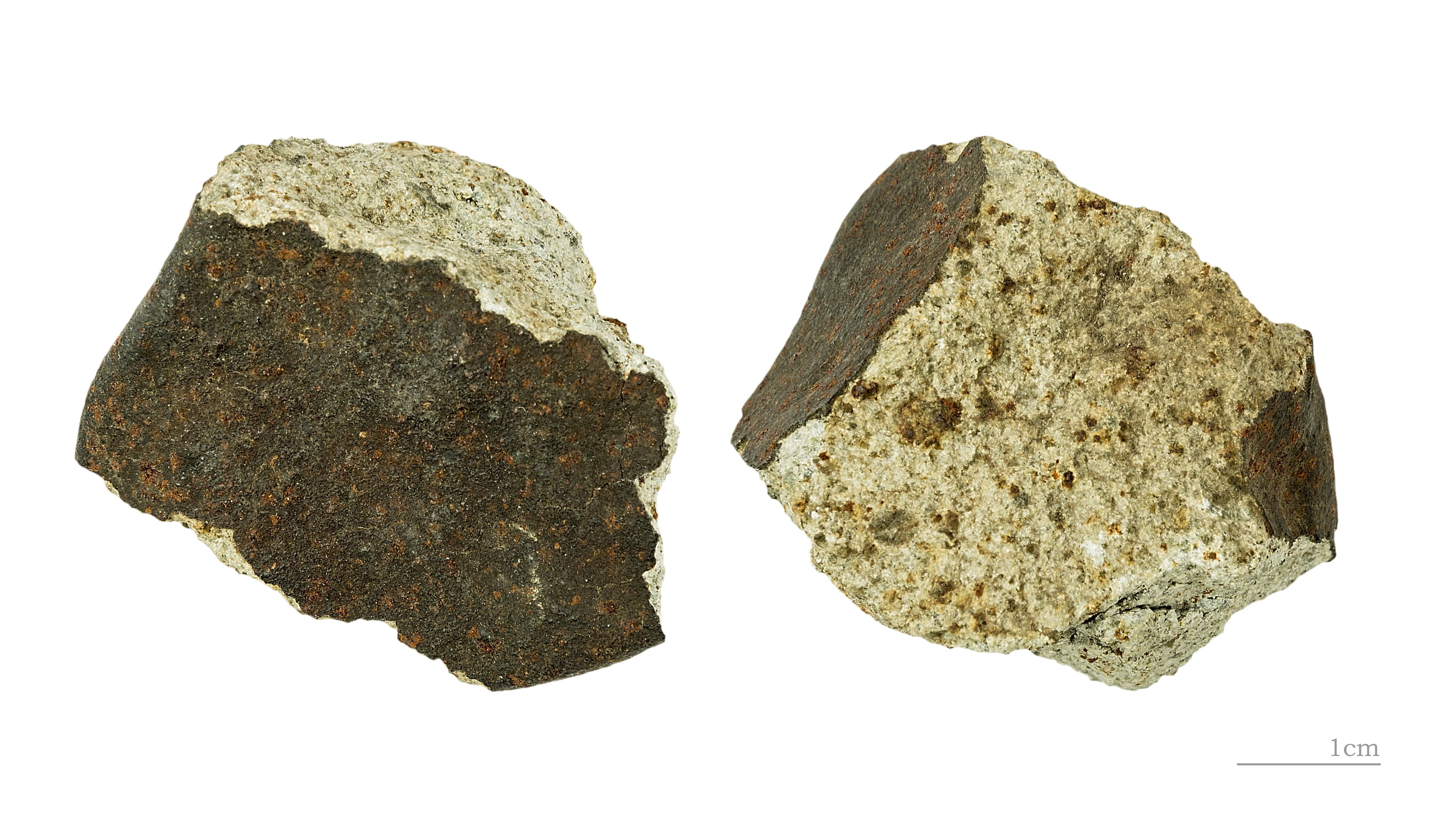
Pnompehn meteorite (Chondrite L6)
Image: Didier Descouens (CC BY-SA 4.0)
Mineral NamePnompehn meteorite (Chondrite L6)
Chemical FormulaPrimarily silicates (olivine, pyroxene) and nickel-iron metal
Mohs Hardness5
Streak ColorGray to brownish-gray
CleavageNone (as a rock); constituent minerals have cleavage
FractureUneven to sub-conchoidal
Specific Gravity3.6
Colorsdark brownish-black, grayish-white, light brown
Transparencyopaque
Type LocalityPhnom Penh, Cambodia
Mineral GroupStony meteorite (Chondrite)
Usesscientific study, collector's item
Associated Mineralsolivine, pyroxene, plagioclase, nickel-iron metal, troilite
Rarityuncommon
Description
This specimen shows two views of a Pnompehn L6 chondrite meteorite, featuring a dark brownish-black fusion crust on one side and a lighter, granular grayish-white to light brown interior with visible dark metallic specks on the other.
Geological Context
Chondrites are the most common type of stony meteorites, formed from the accretion of dust and small grains in the early solar nebula. L6 chondrites have undergone significant thermal metamorphism on their parent asteroid, leading to recrystallization and homogenization of their original chondrules.


