Rose Quartz
Image: “Jon Zander (Digon3)" (CC BY-SA 3.0)
Mineral NameRose Quartz
Chemical FormulaSiO2
Mohs Hardness7
Crystal Systemtrigonal
Lustervitreous
Streak Colorwhite
Cleavagenone
Fractureconchoidal
Specific Gravity2.65
Colorspink, pale pink, rose
Transparencytranslucent
Type LocalityBrazil, South Africa, USA (South Dakota), India, Madagascar
Mineral GroupSilicates
Usesjewelry, ornamental objects, carvings, collector
Associated Mineralsfeldspar, mica, tourmaline, beryl
Raritycommon
Description
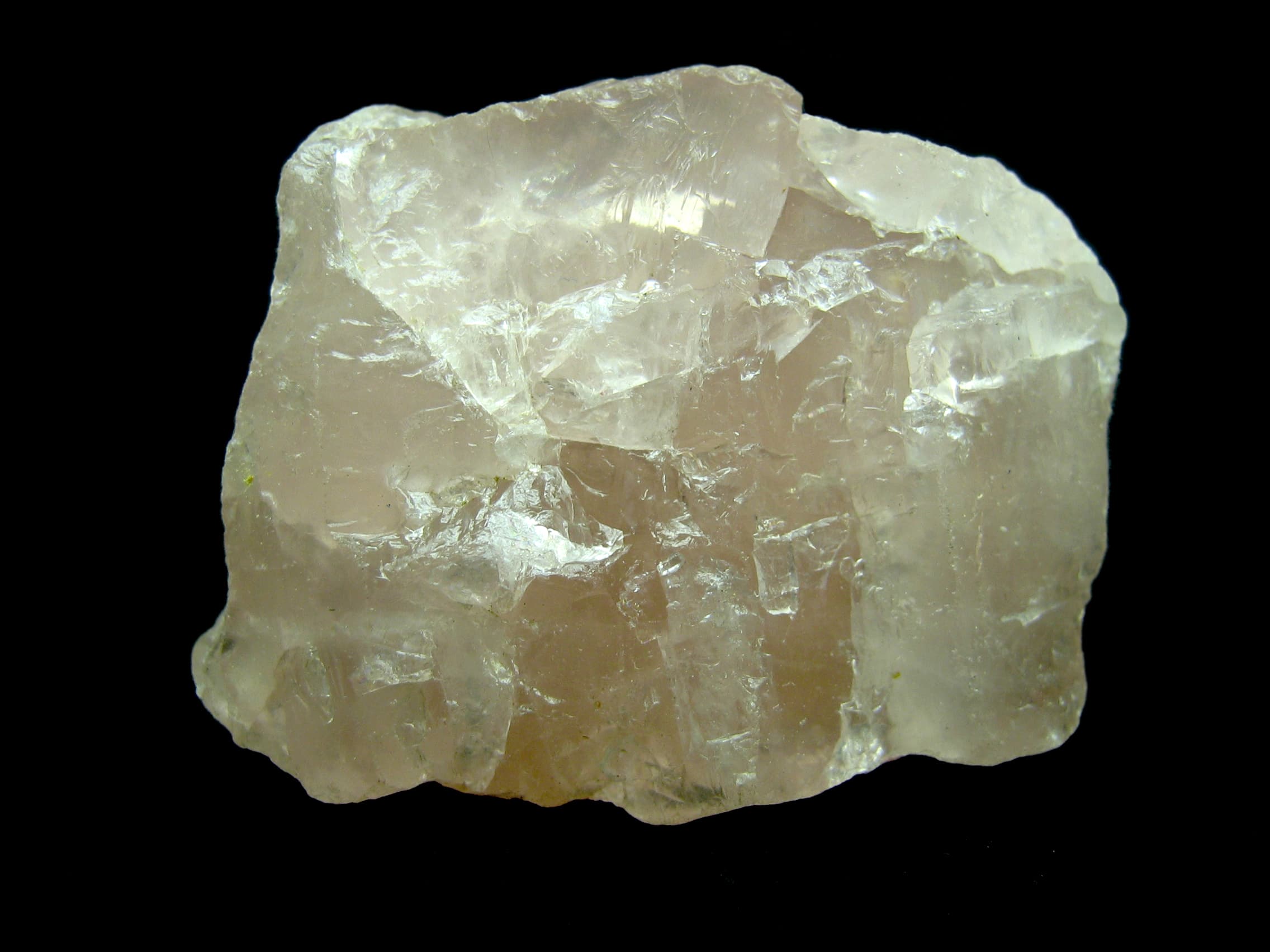
This image displays a raw, translucent chunk of rose quartz, exhibiting a delicate pale pink hue with some internal fractures and a somewhat glassy appearance.
Geological Context
Rose quartz typically forms in pegmatites and hydrothermal veins, often crystallizing from silica-rich fluids at moderate temperatures. Its characteristic pink color is believed to be due to microscopic inclusions of dumortierite or possibly irradiation-induced color centers involving aluminum and phosphorus.