Rare-earth elements (REEs)
Image: Ronald Werner (CC BY-SA 4.0)
Mineral NameRare-earth elements (REEs)
Chemical FormulaN/A
Mohs HardnessVariable (typically 3-7 for common REE minerals)
Streak ColorVariable (e.g., white, pale yellow, reddish-brown)
CleavageVariable (e.g., distinct, poor, none)
FractureVariable (e.g., conchoidal, uneven, splintery)
Specific GravityVariable (typically 3.0-7.0 for common REE minerals)
ColorsVariable (e.g., colorless, yellow, brown, red, green, black)
TransparencyVariable (e.g., transparent, translucent, opaque)
Type LocalityWorldwide, major deposits in China (Bayan Obo), USA (Mountain Pass), Australia (Mount Weld), Brazil, India, Russia.
Mineral GroupVarious (e.g., Phosphates, Carbonates, Silicates, Oxides)
UsesElectronics (magnets, phosphors, catalysts), Medical imaging, Renewable energy technologies, Defense applications, Metallurgy, Glass polishing
Associated MineralsFluorite, Barite, Iron oxides, Thorium minerals, Zircon, Apatite, Feldspar, Quartz
Description
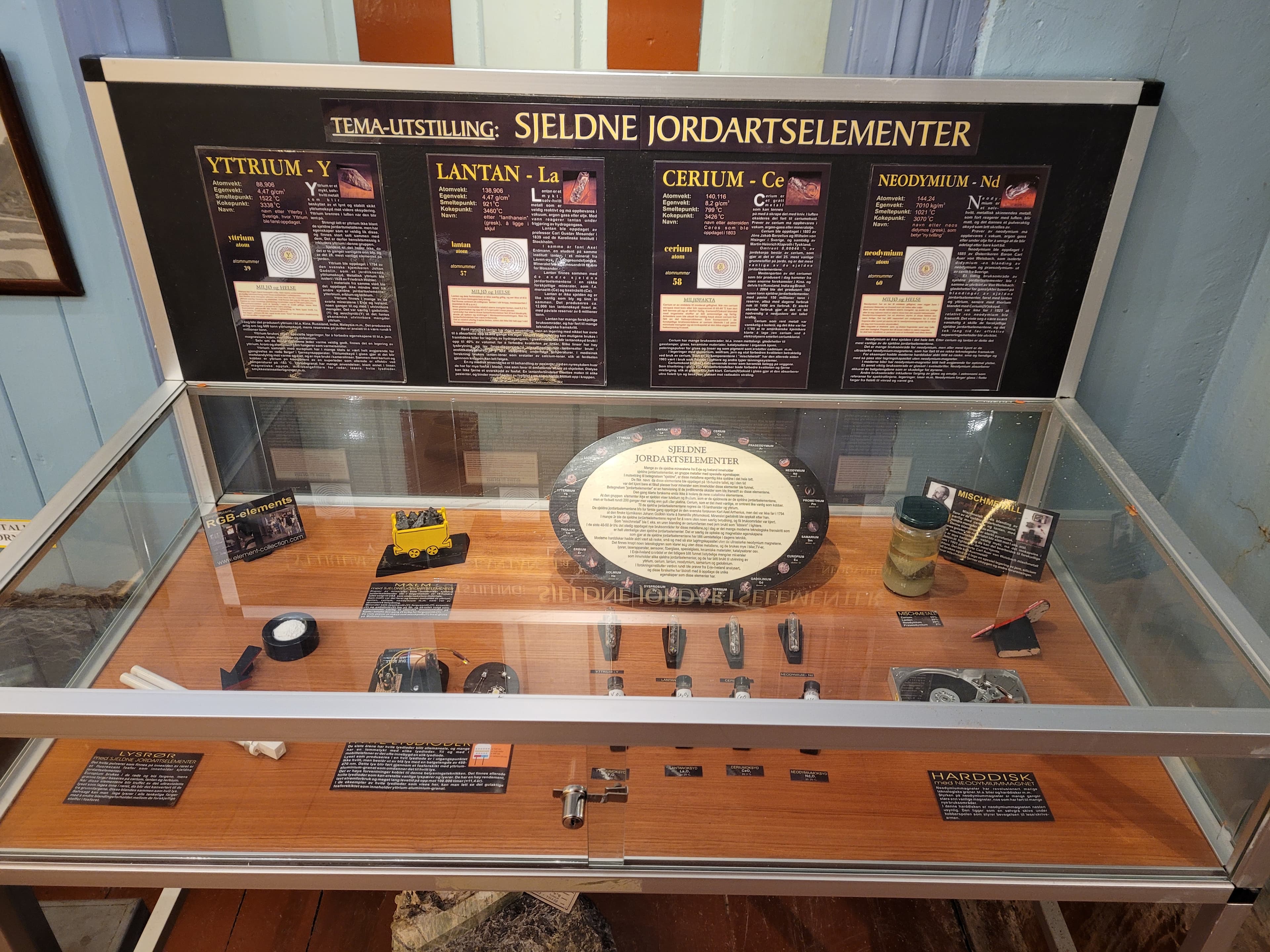
A museum display case showcasing the applications of rare-earth elements, featuring information panels for Yttrium, Lanthanum, Cerium, and Neodymium, alongside various objects representing their uses.
Geological Context
Rare-earth elements are concentrated in specific geological environments such as carbonatites, alkaline igneous rocks, pegmatites, and ion-adsorption clays, forming economically viable deposits due to their incompatible element behavior.


