Quartz
Image: Bultro (CC BY-SA 4.0)
Mineral NameQuartz
Chemical FormulaSiO2
Mohs Hardness7
Crystal Systemtrigonal
Lustervitreous
Streak Colorwhite
Cleavagenone
Fractureconchoidal
Specific Gravity2.65
Colorscolorless, white, purple, yellow, brown, black
Transparencytransparent
Type LocalityWorldwide
Mineral GroupSilicates
Usesjewelry, industrial, collector specimens, ornamental
Associated Mineralsfeldspar, mica, calcite, pyrite
Raritycommon
Description
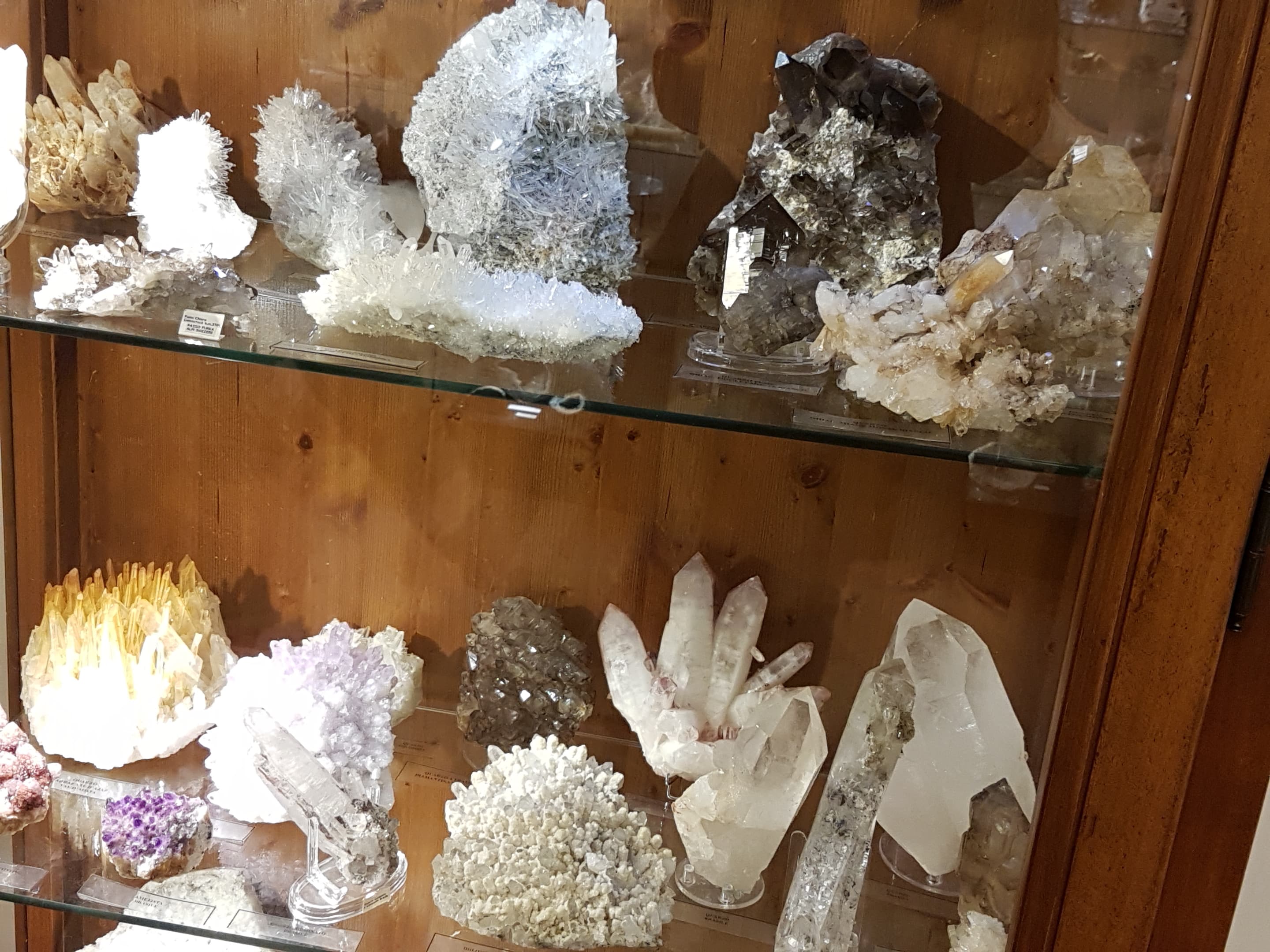
The image displays a diverse collection of quartz specimens, including clear, milky, smoky, amethyst, and citrine varieties, exhibiting various crystal habits from individual large crystals to druzy clusters on matrix.
Geological Context
Quartz is a ubiquitous mineral, forming in a wide range of geological environments, including igneous rocks (granites, pegmatites), metamorphic rocks (gneiss, schist), and sedimentary rocks (sandstone, chert) through hydrothermal processes or crystallization from magma.


