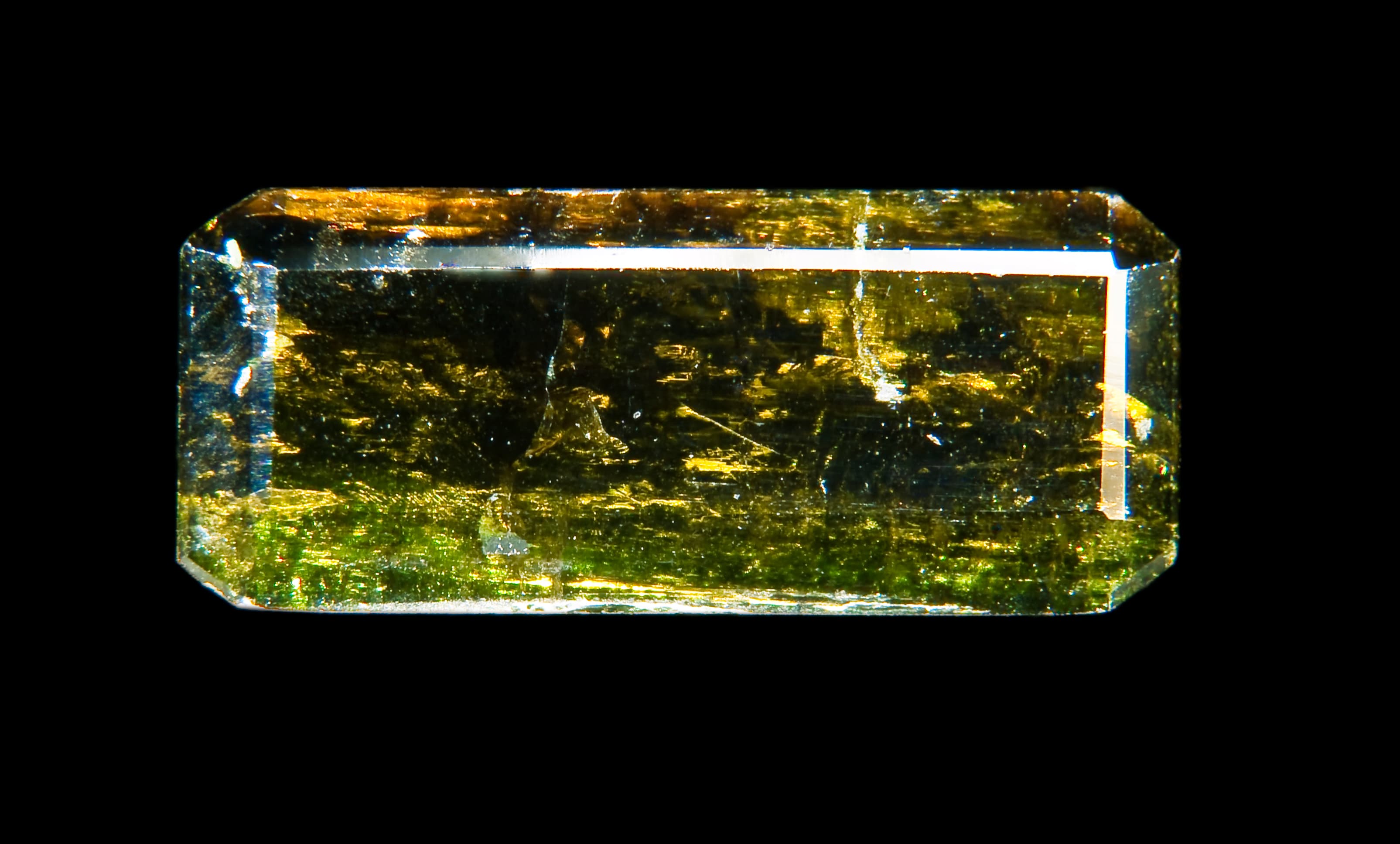
Epidote
Image: Didier Descouens (CC BY-SA 4.0)
Mineral NameEpidote
Chemical FormulaCa2(Al,Fe)3(SiO4)3(OH)
Mohs Hardness6
Crystal Systemmonoclinic
Lustervitreous
Streak Colorwhite to grayish white
Cleavageperfect on {001}, good on {100}
Fractureuneven to conchoidal
Specific Gravity3.35
Colorspistachio green, yellow-green, olive green, brownish green, black
Transparencytransparent
Type LocalityMadagascar
Mineral GroupSorosilicates
Usesjewelry, collector
Associated Mineralsquartz, feldspar, garnet, actinolite, calcite
Rarityuncommon
Description
This image displays a rectangular, faceted epidote gemstone, exhibiting a vibrant yellow-green to olive-green color with good transparency and a vitreous luster.
Geological Context
Epidote is a common metamorphic mineral found in regionally metamorphosed rocks, particularly in greenschist and amphibolite facies. It also occurs in contact metamorphic zones and as a hydrothermal alteration product in igneous rocks.


