Quartz
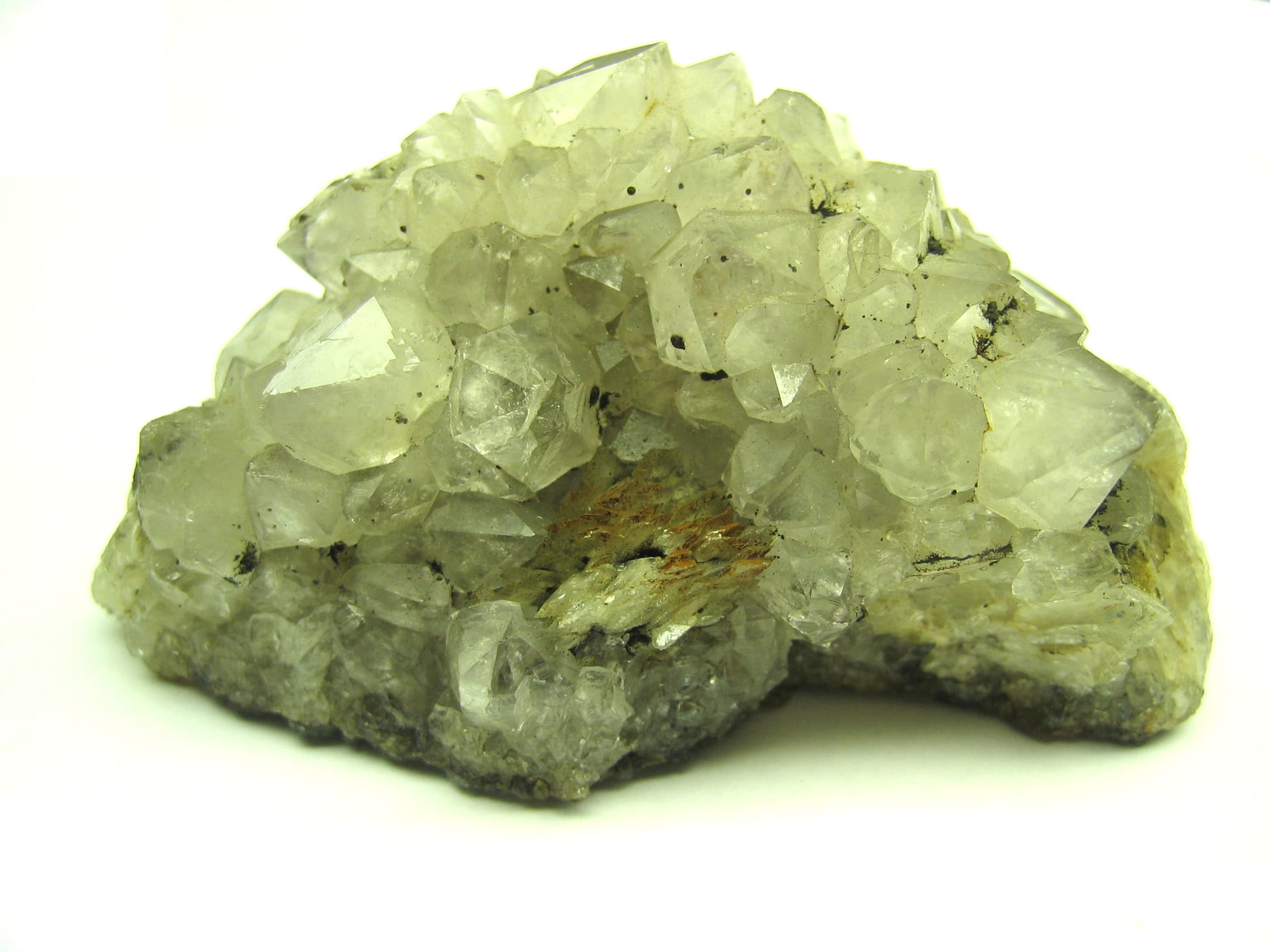
Image: “Jon Zander (Digon3)" (CC BY-SA 3.0)
Mineral NameQuartz
Chemical FormulaSiO2
Mohs Hardness7
Crystal Systemtrigonal
Lustervitreous
Streak Colorwhite
Cleavagenone
Fractureconchoidal
Specific Gravity2.65
Colorscolorless, pale yellow, pale green, white
Transparencytranslucent
Type LocalityWorldwide
Mineral GroupSilicates
Usesjewelry, industrial, collector, electronics, optics
Associated Mineralsfeldspar, mica, calcite, pyrite
Raritycommon
Description
This specimen features a cluster of pale yellowish-green to colorless, translucent quartz crystals, many exhibiting distinct pyramidal terminations, growing on a darker matrix with some visible inclusions.
Geological Context
Quartz is a ubiquitous mineral found in a vast array of geological settings, including igneous rocks (granite, rhyolite), metamorphic rocks (gneiss, schist), and sedimentary rocks (sandstone, chert), often forming in hydrothermal veins.