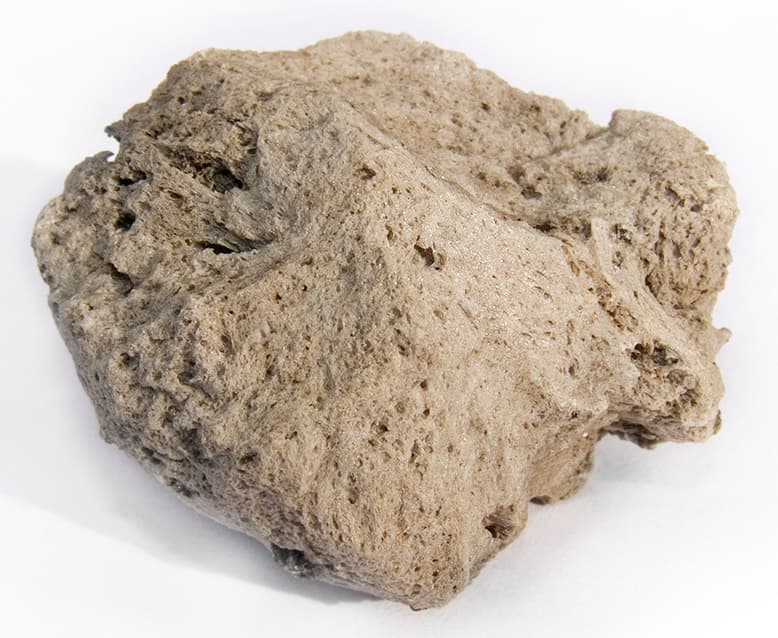
Pumice
Image: Benjamint444 (CC BY-SA 3.0)
Mineral NamePumice
Chemical Formula(Na,K,Ca)AlSi3O8 (predominantly amorphous silicate glass)
Mohs Hardness5
Crystal Systemamorphous
Lusterdull
Streak Colorwhite
Cleavagenone
Fractureconchoidal
Specific Gravity0.5
Colorswhite, grey, light brown, tan
Transparencyopaque
Type LocalityWorldwide in volcanic regions (e.g., Italy, USA, Greece, Indonesia)
Mineral GroupVolcanic Glass / Igneous Rock
Usesabrasives, lightweight aggregate, horticulture, cosmetics, denim washing
Associated Mineralsquartz, feldspar, biotite, hornblende (as phenocrysts)
Raritycommon
Description
This image displays a light tan to grey, irregularly shaped piece of pumice, characterized by its highly porous and frothy texture with numerous visible vesicles.
Geological Context
Pumice forms during explosive volcanic eruptions when gas-rich, viscous lava rapidly cools and depressurizes. The rapid exsolution of gases creates abundant vesicles, resulting in a lightweight, glassy rock.


