Orthoceras Fossil
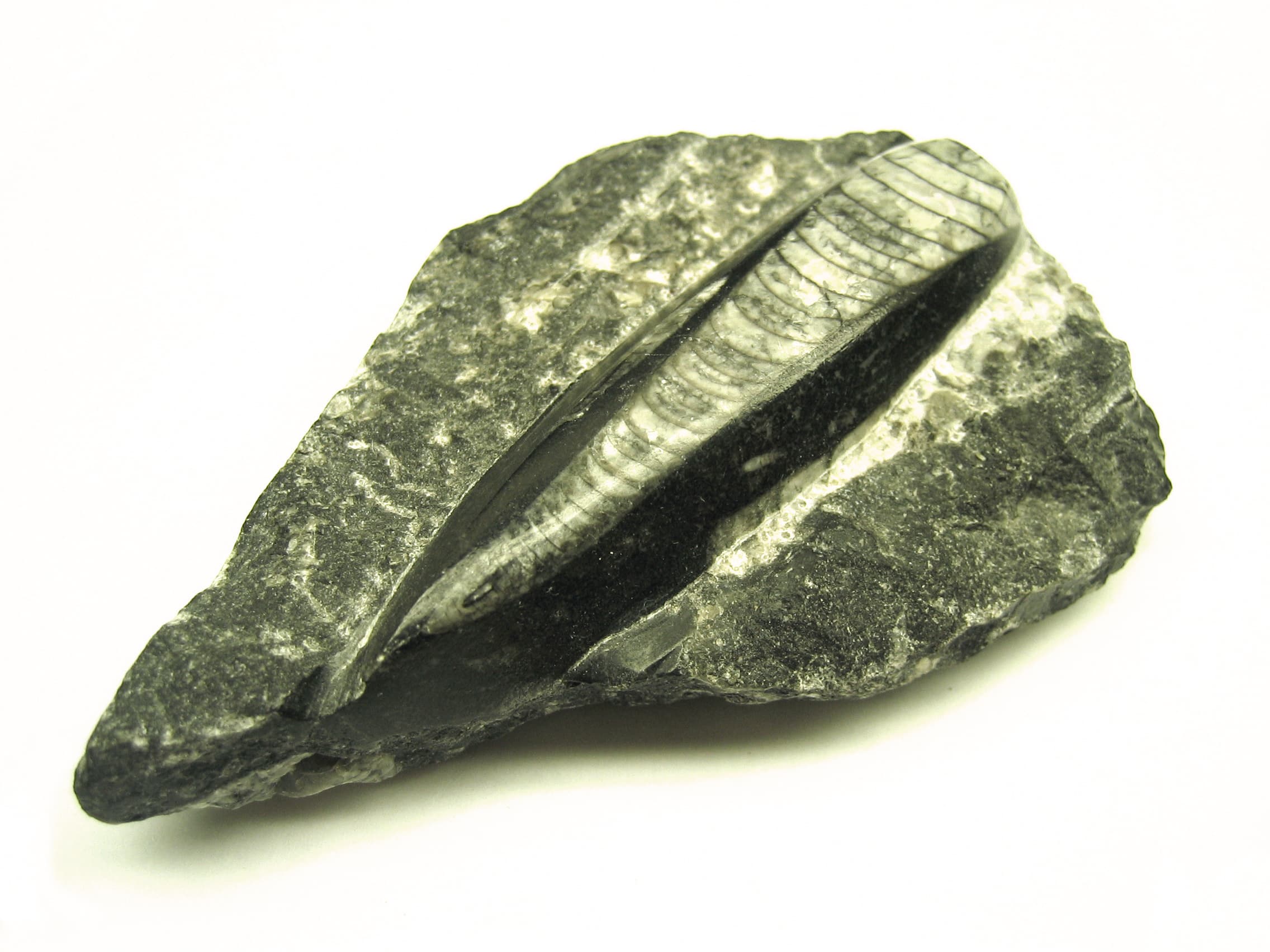
Image: “Jon Zander (Digon3)" (CC BY-SA 3.0)
Mineral NameOrthoceras Fossil
Chemical FormulaCaCO3 (primarily, as calcite replacement)
Mohs Hardness3
Streak Colorwhite
Cleavageperfect rhombohedral (for calcite replacement)
Fractureconchoidal to uneven
Specific Gravity2.71
Colorsdark grey, black, white, light grey
Transparencyopaque
Type LocalityWorldwide in marine sedimentary rocks; notably Morocco for commercial specimens
Mineral GroupCarbonates (as the primary replacement mineral)
Usescollector, decorative, educational
Associated Mineralscalcite, dolomite, clay minerals, quartz (in matrix)
Raritycommon
Description
An elongated, conical fossil of an Orthoceras cephalopod, displaying distinct transverse septa, embedded within a dark grey sedimentary rock matrix.
Geological Context
Orthoceras fossils are found in marine sedimentary rocks, typically limestones or shales, formed during the Paleozoic Era (Ordovician to Triassic, with this specimen specifically from the Silurian). They represent the preserved shells of ancient cephalopods that lived in ancient oceans.