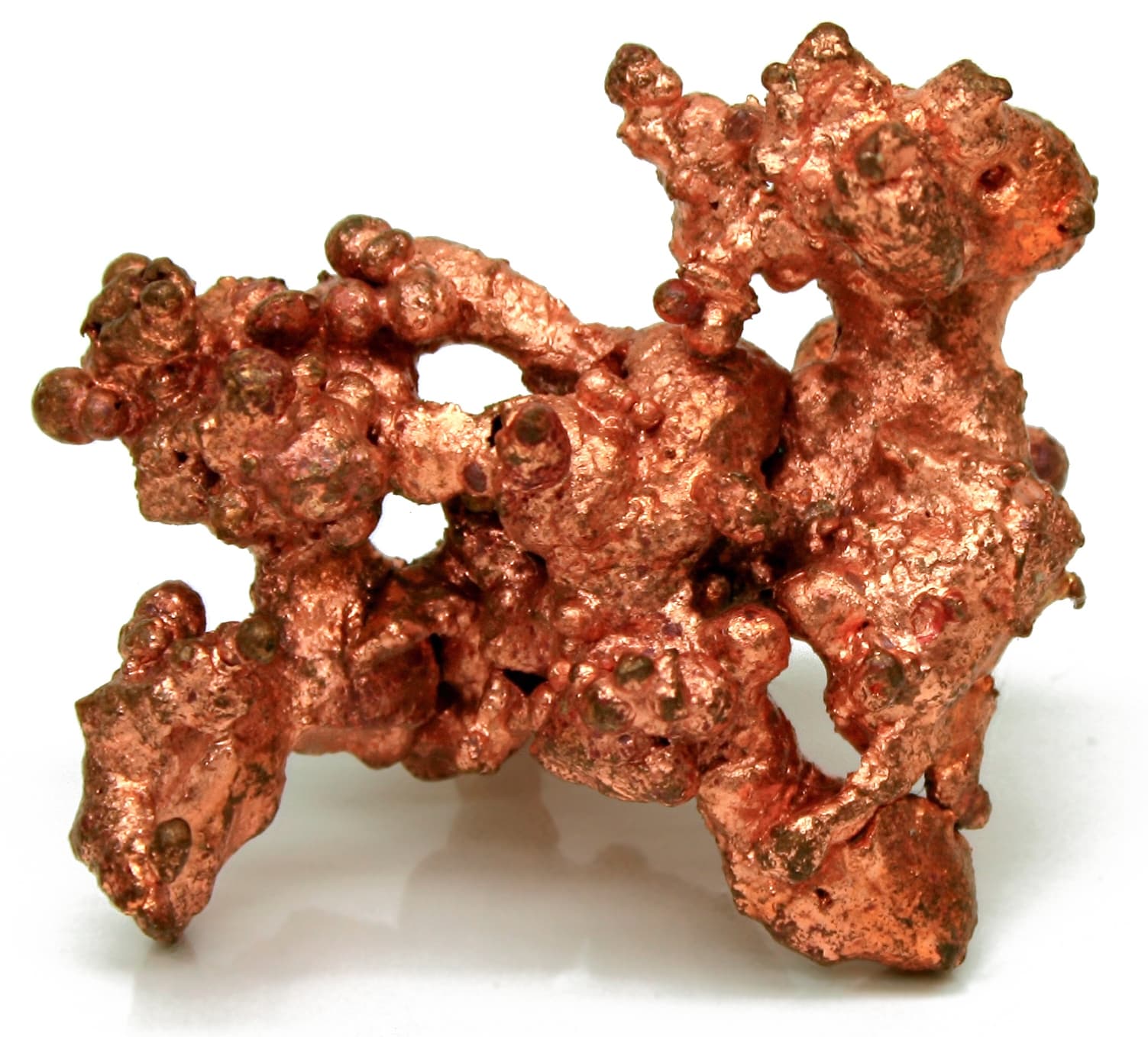
Native Copper
Image: Native_Copper_Macro_Digon3.jpg: “Jonathan Zander (Digon3)" derivative work: Mav (talk) (CC BY-SA 3.0)
Mineral NameNative Copper
Chemical FormulaCu
Mohs Hardness2.5
Crystal Systemcubic
Lustermetallic
Streak Colorcopper-red
Cleavagenone
Fracturehackly
Specific Gravity8.9
Colorscopper-red, brown, green, black
Transparencyopaque
Type LocalityKeweenaw Peninsula, Michigan, USA
Mineral GroupNative Elements
Usesindustrial source of copper, collector specimens
Associated Mineralscuprite, chalcocite, malachite, azurite, epidote, calcite
Rarityuncommon
Description
This specimen is an intricate, branching aggregate of native copper, displaying a bright, reddish-orange metallic luster with some darker tarnished areas, forming a botryoidal or dendritic habit.
Geological Context
Native copper typically forms in the oxidized zones of copper ore deposits, in hydrothermal veins, or as amygdule fillings in basaltic lava flows, often associated with secondary copper minerals.


