Gypsum
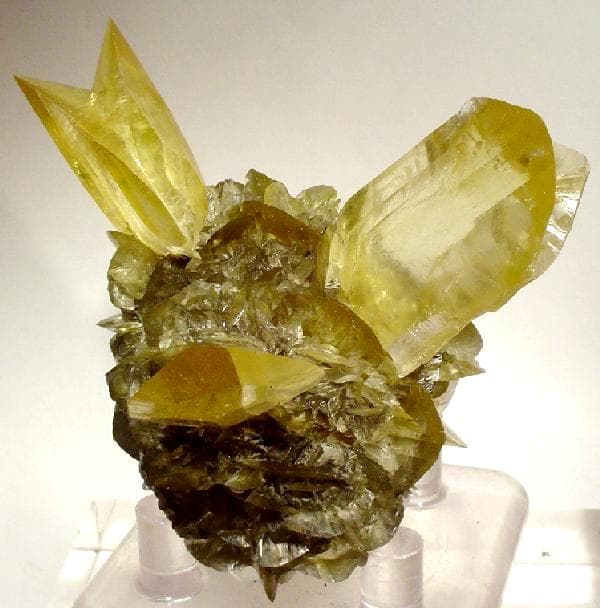
Image: Robert M. Lavinsky (CC BY-SA 3.0)
Mineral NameGypsum
Chemical FormulaCaSO₄·2H₂O
Mohs Hardness1.5
Crystal Systemmonoclinic
Lustervitreous
Streak Colorwhite
Cleavageperfect on {010}, distinct on {100} and {111}
Fractureuneven
Specific Gravity2.32
Colorscolorless, white, gray, yellow, red, brown
Transparencytransparent
Type LocalityRed River Floodway, Winnipeg
Mineral GroupSulfates
Usesplaster of Paris, drywall, fertilizer, cement, ornamental stone, collector
Associated Mineralshalite, sulfur, calcite, dolomite, anhydrite, celestite
Raritycommon
Description
This image displays a transparent to translucent, colorless crystal of gypsum, specifically the selenite variety, exhibiting well-defined crystal forms and possibly twinning. The crystal appears blocky with smooth faces.
Geological Context
Gypsum is a common evaporite mineral that forms in sedimentary environments, typically from the precipitation of calcium sulfate in evaporating saline waters such as shallow marine basins, lagoons, or saline lakes.