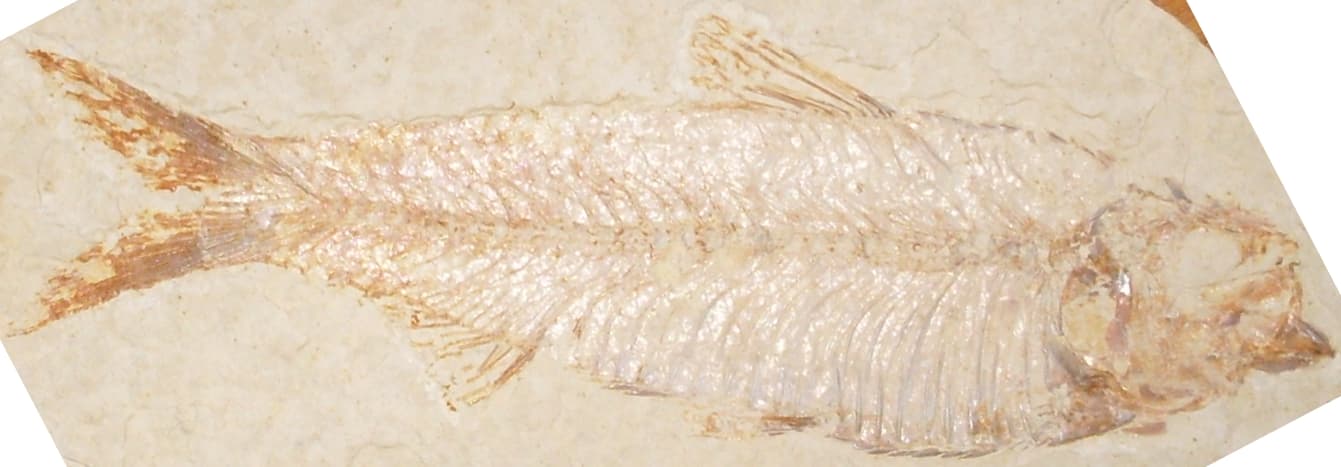
Knightia Fossil Fish
Image: Ornitholestes (Public domain)
Mineral NameKnightia Fossil Fish
Chemical FormulaPrimarily calcium phosphate (Ca5(PO4)3(OH,F,Cl)) for the bone material, embedded in a sedimentary matrix (e.g., calcite, clay minerals, quartz).
Mohs Hardness3
Streak ColorWhite to light brown (for the fossilized bone); varies with matrix.
CleavageNone (for the fossil); the surrounding sedimentary matrix typically exhibits no cleavage or poor parting.
FractureUneven to conchoidal (for the fossilized bone); conchoidal to earthy (for the matrix).
Specific Gravity2.65
Colorslight brown, tan, white, cream
Transparencyopaque
Type LocalityGreen River Formation, Wyoming, USA
Mineral GroupFossil (biogenic material replaced by minerals, primarily phosphates and carbonates).
Usesscientific study, collector's item, decorative piece
Associated Mineralscalcite, clay minerals, quartz
Raritycommon
Description
This image displays a well-preserved fossil of a Knightia fish, showing its skeletal structure and fins in light brown and white tones against a cream-colored, fine-grained sedimentary matrix. The delicate bones and scales exhibit a somewhat pearly luster.
Geological Context
Knightia fossils are typically found in the Eocene Green River Formation, a lacustrine deposit formed in ancient freshwater lakes. Rapid burial in anoxic conditions allowed for exceptional preservation of these fish.


