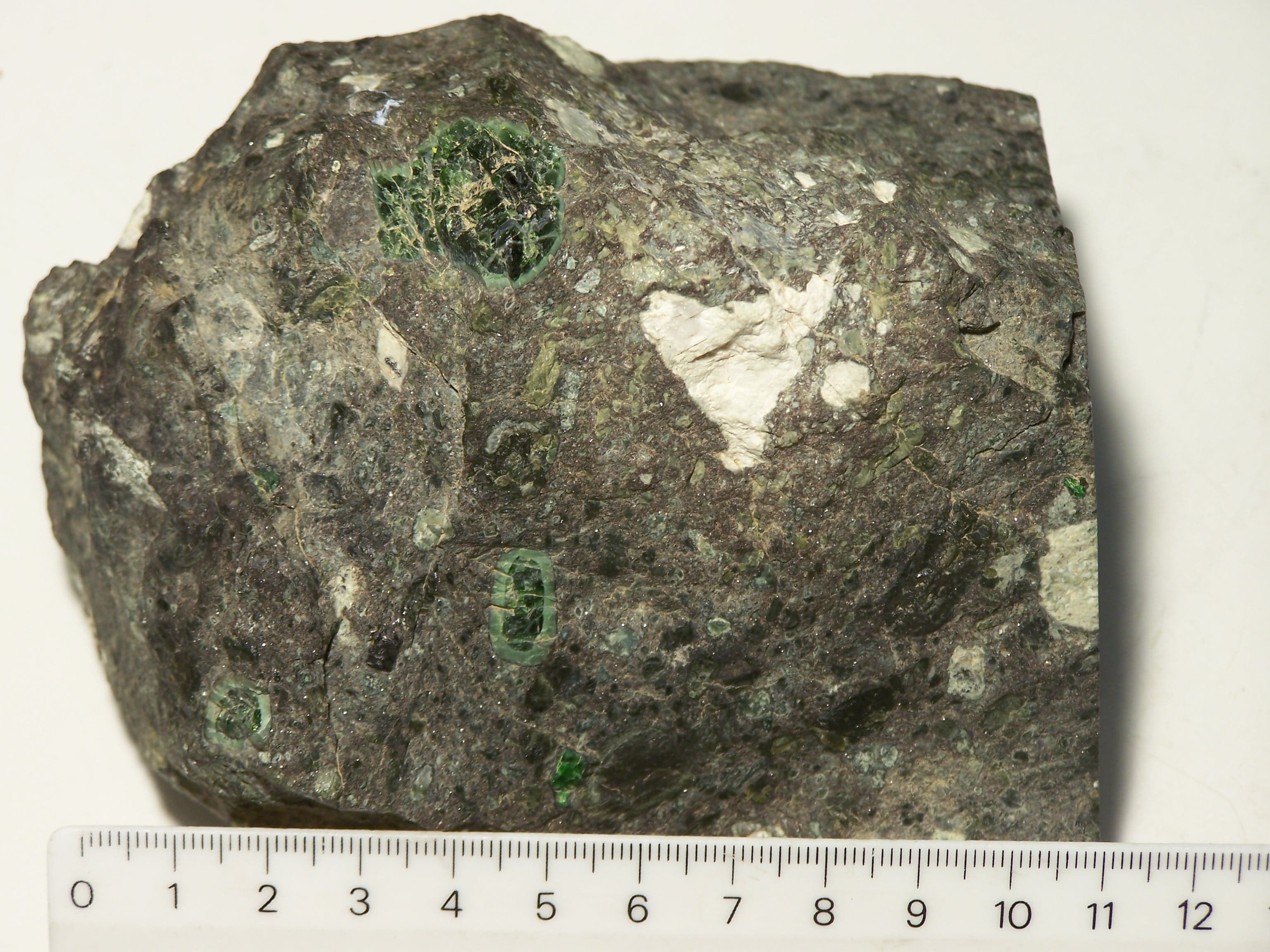
Kimberlite
Image: Woudloper (CC BY-SA 1.0)
Mineral NameKimberlite
Chemical FormulaComplex, variable (ultramafic, potassic igneous rock rich in Mg, Fe, K, volatiles)
Mohs Hardness2.5
Streak ColorLight greenish-gray to brownish-gray
CleavageNot applicable (rock)
FractureUneven to hackly
Specific Gravity2.7
Colorsdark gray, greenish-black, bluish-green, brownish-green
TransparencyOpaque
Type LocalityKimberley, South Africa (type locality)
Mineral GroupIgneous rock (ultramafic, potassic volcanic rock)
Usesdiamond source, scientific research
Associated Mineralsolivine, phlogopite, serpentine, calcite, pyroxene, garnet, ilmenite, chromite, diamond
Description
The image displays a dark greenish-gray, fine-grained rock matrix containing numerous larger, angular to sub-rounded inclusions, notably bright green minerals (likely olivine or serpentine pseudomorphs) and white to light gray fragments (possibly calcite or altered xenoliths). The sample is approximately 12 cm in length.
Geological Context
Kimberlite forms in the Earth's mantle at depths of 150-450 km and is rapidly emplaced to the surface through deep-seated volcanic pipes, bringing with it mantle xenoliths and diamonds.


