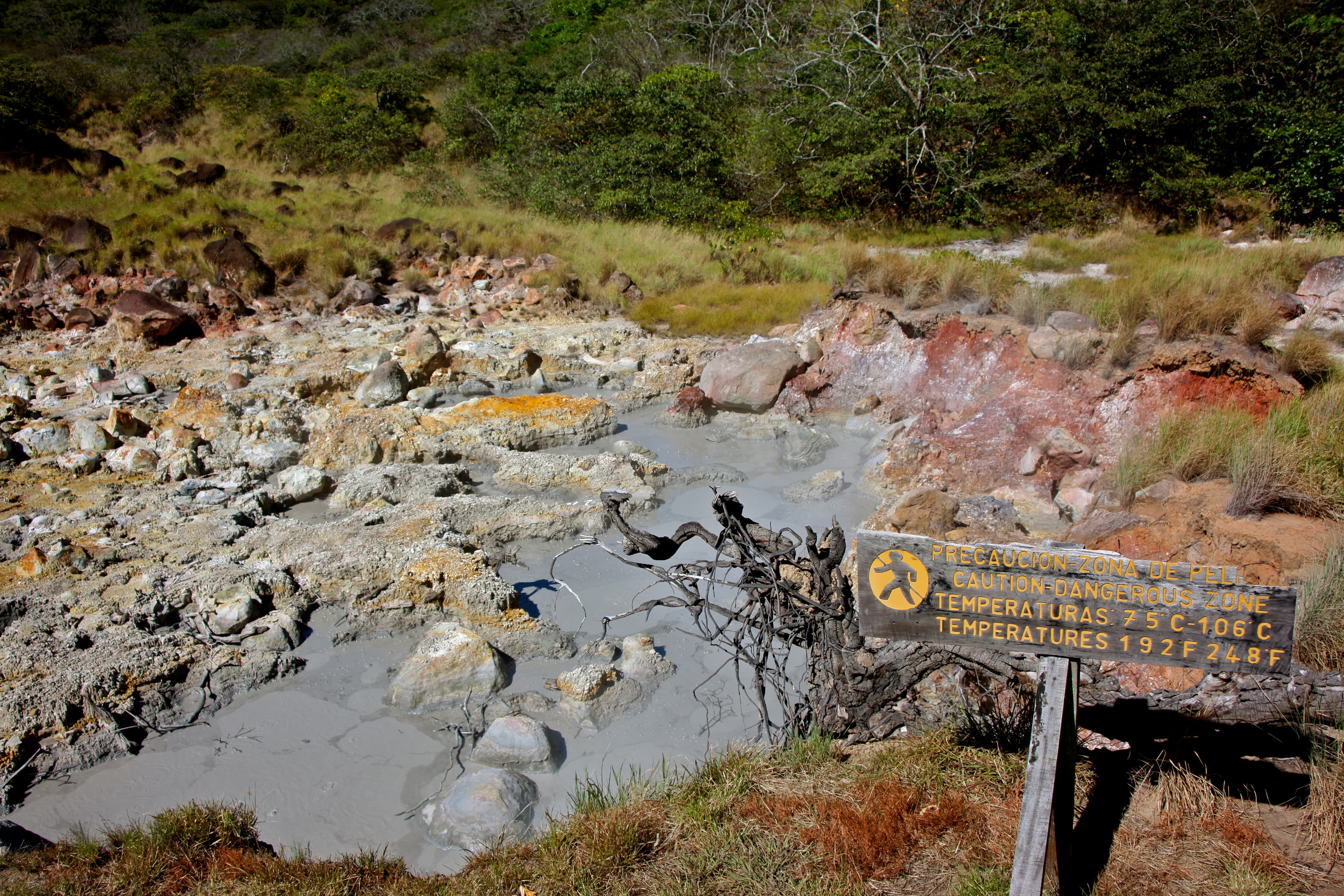
Hydrothermal Mud
Image: Steve Jurvetson from Menlo Park, USA (CC BY 2.0)
Mineral NameHydrothermal Mud
Chemical FormulaVariable (primarily hydrated aluminosilicates, e.g., Al2Si2O5(OH)4 for kaolinite, plus water and dissolved ions)
Crystal Systemamorphous
Streak ColorN/A (variable, often white for clays)
CleavageN/A (clays have perfect basal cleavage but not visible in mud)
Fractureearthy
Colorsgrey, white, yellow, reddish-brown
Transparencyopaque
Type LocalityRincon de La Vieja, Costa Rica
Mineral GroupPhyllosilicates (clay minerals), Oxides (iron oxides), Native Elements (sulfur)
Usesscientific study, tourism, geothermal resource indicator
Associated Mineralskaolinite, smectite, illite, quartz (altered), pyrite, native sulfur, hematite, goethite
Rarityuncommon
Description
A bubbling pool of grey, viscous mud, surrounded by intensely hydrothermally altered rock displaying white, yellowish, and reddish-brown coloration.
Geological Context
This mud pot is a surface manifestation of a hydrothermal system within the active volcanic complex of Rincon de La Vieja. Superheated acidic fluids alter volcanic rocks into fine-grained clay minerals, which mix with water to form the characteristic mud.


