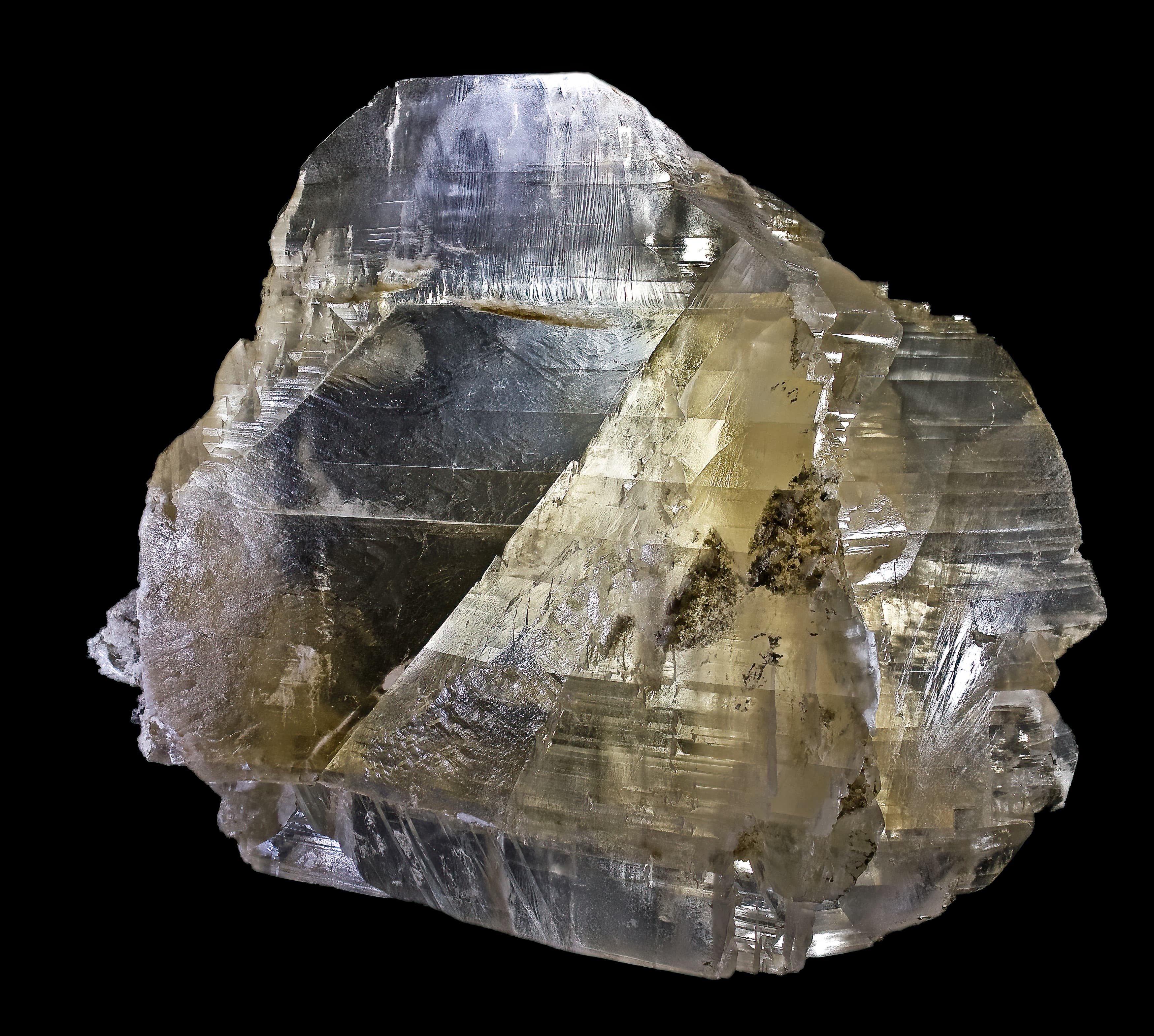
Gypsum
Image: Didier Descouens (CC BY-SA 4.0)
Mineral NameGypsum
Chemical FormulaCaSO₄·2H₂O
Mohs Hardness2
Crystal Systemmonoclinic
Lustervitreous
Streak Colorwhite
Cleavageperfect in one direction, good in two others
Fractureconchoidal
Specific Gravity2.32
Colorscolorless, white, yellowish
Transparencytransparent
Type LocalityCarresse-Cassaber, Pyrénées-Atlantiques - France
Mineral GroupSulfates
Usesplaster, drywall, fertilizer, cement, sculpture, collector
Associated Mineralshalite, anhydrite, calcite, dolomite
Raritycommon
Description
This image displays a large, translucent to transparent crystal of gypsum, exhibiting a yellowish-white hue and prominent, parallel cleavage planes that give it a layered appearance.
Geological Context
Gypsum is a common evaporite mineral, forming from the precipitation of calcium sulfate from saline waters, typically in shallow marine basins or playa lakes. It is often found in sedimentary rock sequences.


