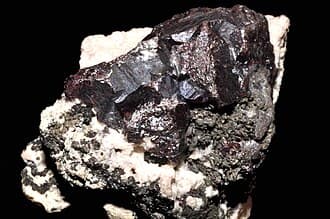
Gold
Image: Islam90 (CC BY-SA 4.0)
Mineral NameGold
Chemical FormulaAu
Mohs Hardness2.5
Crystal Systemcubic
Lustermetallic
Streak Colorgolden yellow
Cleavagenone
Fracturehackly
Specific Gravity19.3
Colorsgolden yellow
Transparencyopaque
Type LocalityWorldwide, notable localities include Witwatersrand (South Africa), Nevada (USA), Kalgoorlie (Australia), Yukon (Canada)
Mineral GroupNative Elements
Usesjewelry, currency, investment, electronics, dentistry
Associated Mineralsquartz, pyrite, calaverite, sylvanite, arsenopyrite
Rarityuncommon
Description
The image shows microscopic flakes and irregular grains of gold, appearing bright yellow to white under polarized light, against a dark background. These fragments exhibit a metallic sheen and irregular shapes typical of native gold.
Geological Context
Gold typically forms in hydrothermal veins associated with quartz, often in igneous or metamorphic rocks, or as placer deposits in alluvial sediments due to its high density and chemical inertness. It is a primary ore mineral in many significant economic deposits.