Agate
Image: Sailko (CC BY-SA 3.0)
Mineral NameAgate
Chemical FormulaSiO2
Mohs Hardness6.5
Crystal Systemtrigonal
Streak ColorWhite
CleavageNone
FractureConchoidal to uneven
Specific Gravity2.6
Colorsblack, white, cream, orange, brown
TransparencyTranslucent
Type LocalityWorldwide
Mineral GroupSilicates
Usesjewelry, ornamental objects, collector, industrial
Associated Mineralsquartz, calcite, zeolites
Raritycommon
Description
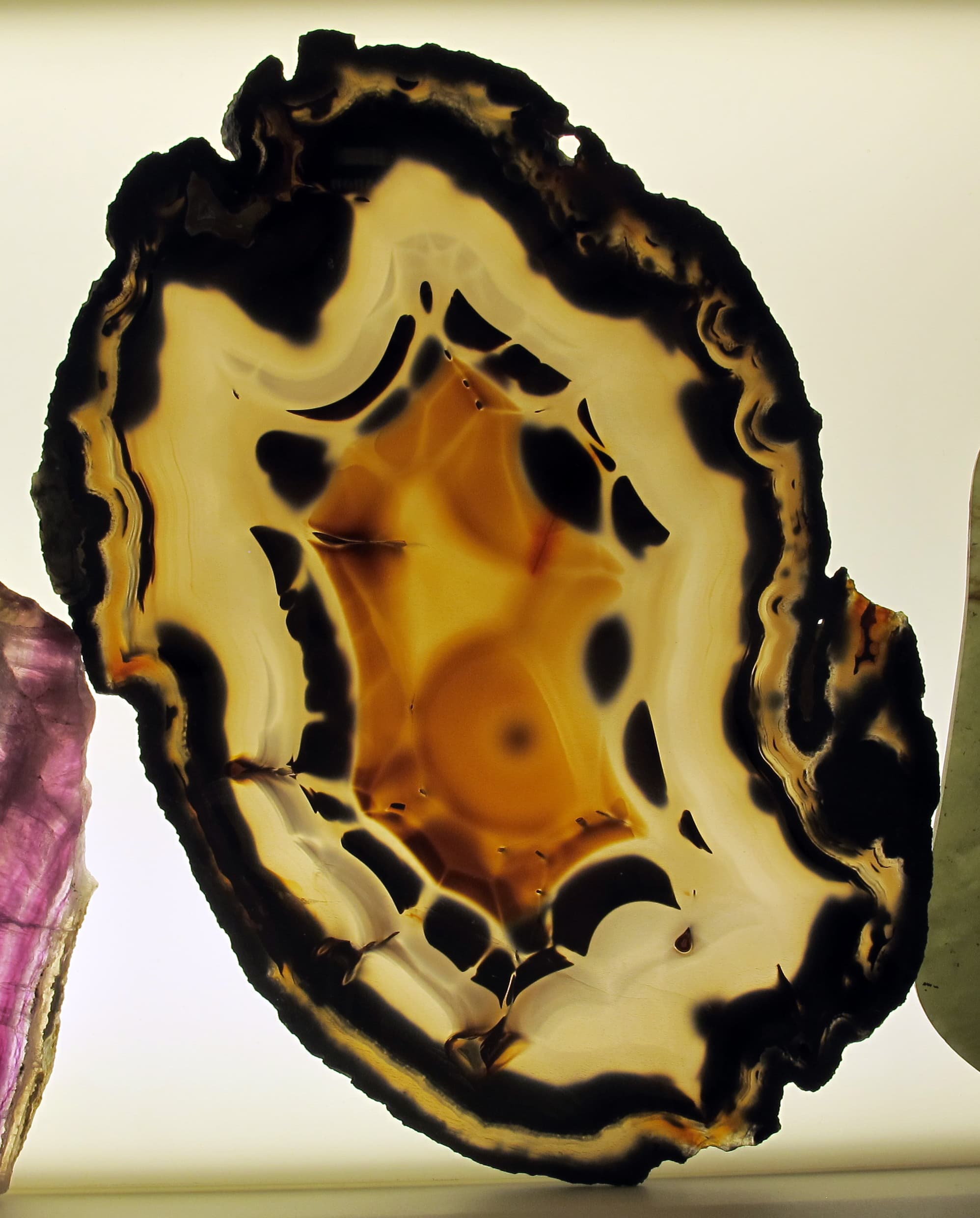
A thin, polished slice of agate, backlit to reveal its translucency and intricate banding. It displays concentric layers of black, white, and orange-brown, with a distinct eye-like pattern in the center.
Geological Context
Agate typically forms in cavities of volcanic rocks (like basalts) or sometimes in metamorphic rocks, where silica-rich fluids deposit successive layers of microcrystalline quartz (chalcedony) over time.