Crinoid Fossil
Image: Anne Burgess (CC BY-SA 2.0)
Mineral NameCrinoid Fossil
Chemical FormulaCaCO3
Mohs Hardness3
Crystal Systemtrigonal
Lusterdull
Streak Colorwhite
Cleavageperfect rhombohedral
Fractureconchoidal
Specific Gravity2.71
Colorsgrey, white, brown
Transparencyopaque
Type LocalityScotland, United Kingdom
Mineral GroupCarbonates
Usesscientific study, education, collector's item
Associated Mineralscalcite, dolomite, chert, other marine fossils
Rarityrare
Description
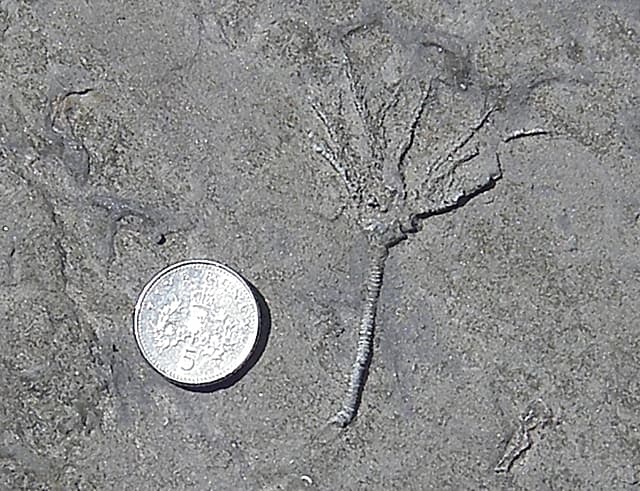
This image shows a well-preserved fossil crinoid, displaying its segmented stalk and delicate, branching arms, embedded in a fine-grained grey sedimentary rock matrix. A five pence coin is placed next to it for scale.
Geological Context
Crinoid fossils are typically found in marine sedimentary rocks, particularly limestones, formed in ancient shallow seas during the Paleozoic Era. They represent the preserved skeletal remains of ancient marine invertebrates.