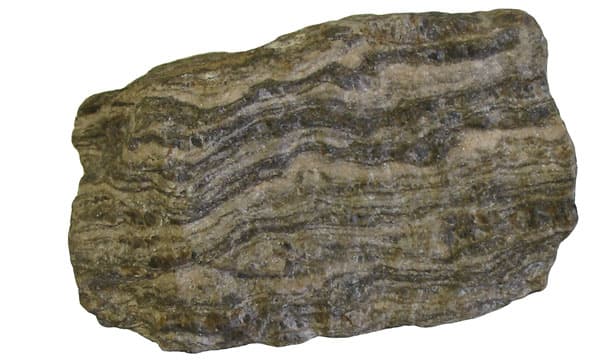
Gneiss
Image: No machine-readable author provided. Siim assumed (based on copyright claims). (CC BY-SA 3.0)
Mineral NameGneiss
Chemical FormulaNot applicable (rock), composed of various minerals
Mohs HardnessVariable, typically 6-7 (for major constituents like quartz and feldspar)
Streak ColorNot applicable (rock), variable for constituent minerals
CleavageVariable, depends on constituent minerals (e.g., perfect in mica, good in feldspar, absent in quartz)
FractureVariable, often uneven to conchoidal
Specific GravityVariable, typically 2.6-3.0
Colorsgrey, white, black, pink, brown, green
TransparencyOpaque to translucent
Type LocalityWorldwide
Mineral GroupMetamorphic rock
Usesconstruction material, decorative stone, road aggregate
Associated Mineralsquartz, feldspar, mica, amphibole, garnet
Raritycommon
Description
This sample of gneiss displays prominent wavy banding with alternating light-colored (felsic) and dark-colored (mafic) mineral layers, characteristic of its metamorphic origin.
Geological Context
Gneiss forms from the high-grade regional metamorphism of pre-existing igneous or sedimentary rocks, where intense heat and pressure cause mineral segregation into distinct bands.


